Quick Facts
- Hold Time: 20-30 seconds for recovery; 1-2 mins for deep mobility.
- Frequency: 3-4 times per week.
- The 3-Day Rule: If pain persists after 72 hours, consult a professional.
- Golden Window: 30-60 minutes post-workout for stretching and protein intake.
- Core Benefit: Muscle recovery stretches increase blood circulation and muscle elasticity, helping to reduce DOMS and lactic acid buildup.
- Physiological Impact: By incorporating these exercises into a post-workout routine, you activate the parasympathetic nervous system, which promotes faster tissue repair and improved joint range of motion.
- Long-term Gain: Consistent stretching prevents long-term stiffness and maintains healthy postural alignment.
Muscle recovery stretches increase blood circulation and muscle elasticity, helping to reduce DOMS and lactic acid buildup. By incorporating these exercises into a post-workout mobility routine, you activate the parasympathetic nervous system, which promotes faster tissue repair and improved joint range of motion. Consistent stretching also prevents long-term stiffness and maintains healthy postural alignment.
Is It Stiffness or Injury? The 3-Day Rule
You finish a high-intensity session, and twelve hours later, you can barely roll out of bed. We have all been there. But as a coach, the first question I ask my athletes is: are you experiencing standard muscle tightness or a genuine injury? Understanding this distinction is the foundation of any effective post-workout mobility routine.
Delayed-onset muscle soreness, or DOMS, typically peaks between 24 and 48 hours after exercise. This is a natural response to microscopic tears in the muscle fibers. However, if you notice localized, sharp pain that increases in intensity after 72 hours, you are likely dealing with a strain or tear rather than simple fatigue. This is where the 3-Day Rule comes in. If the discomfort doesn't begin to subside by the third day, you should pivot from active recovery to the RICE method (Rest, Ice, Compression, Elevation) and consult a physical therapist.
When performing stretches for sore muscles, the goal is never to "push through" sharp pain. True recovery happens when you find the edge of tension—not the edge of agony. Forcing a stretch on an already injured muscle can lead to protective tension, where the nervous system actually tightens the muscle further to prevent what it perceives as further damage. To ensure long-term joint health, focus on gentle, controlled movements that signal to your brain that it is safe to relax.
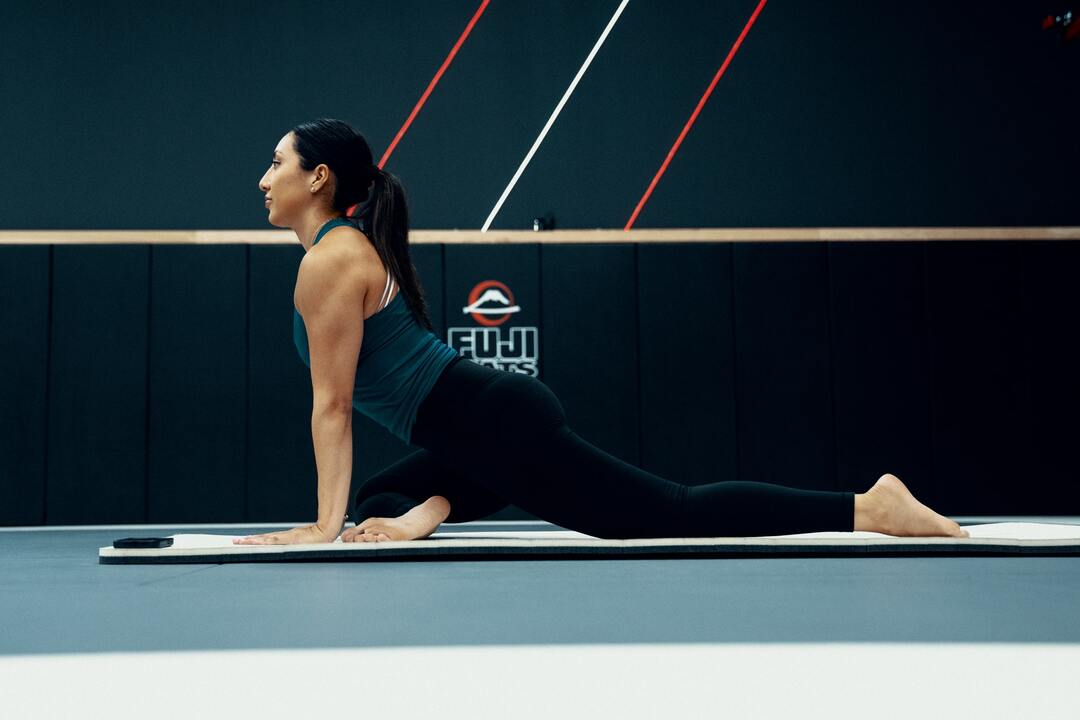
1. The Dragon Pose: Deep Hip Flexor Release
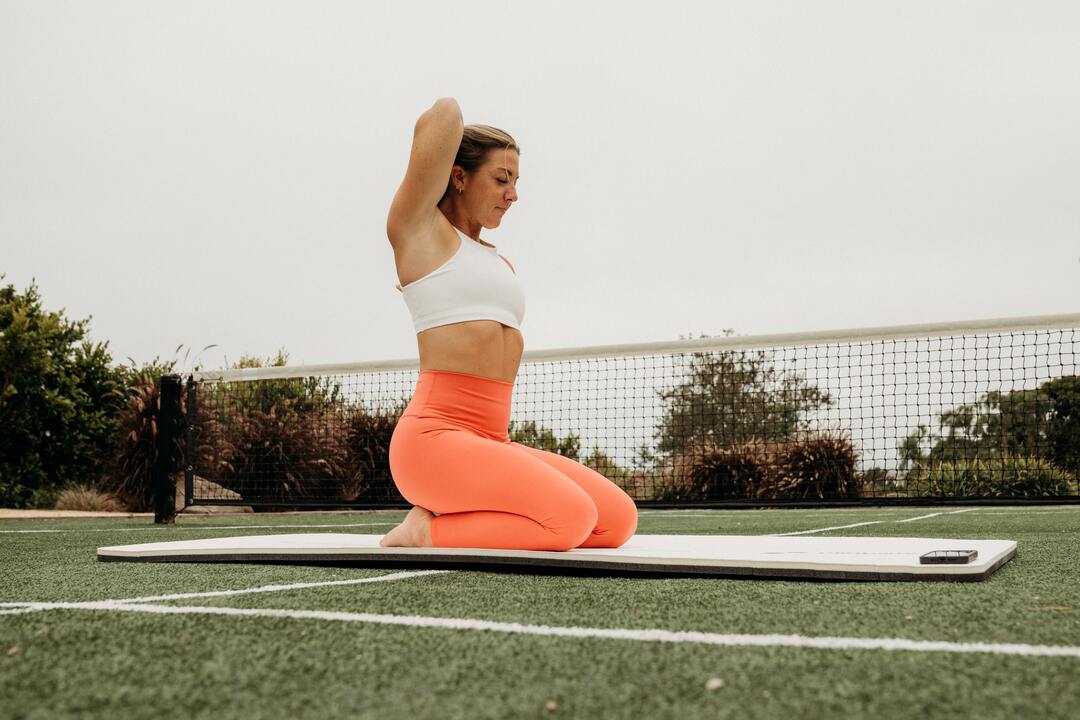
The modern athlete faces a dual threat: intense training sessions and long hours spent sitting at a desk. Both lead to chronically short and tight hip flexors. The Dragon Pose is one of the most effective muscle recovery stretches for those who want to restore postural alignment and relieve pressure on the lower back.
Best For: Runners, cyclists, and desk workers. Why it works: This pose targets the psoas and the deep hip flexors. By opening up the anterior chain, you alleviate the "anterior pelvic tilt" that often causes lower back pain. It is one of the best stretches for tight hip flexors and quads because it allows gravity to do the heavy lifting in terms of myofascial release. How to do it:
- Start in a low lunge position with your back knee on the ground.
- Shift your weight forward until you feel a deep stretch in the front of your rear hip.
- Keep your chest upright and your core engaged to avoid arching your lower back.
- For an added challenge, place your hands on the inside of your front foot and allow the front knee to drift slightly outward.
Hold Time: 20-30 seconds per side for 3 reps.
When using stretches to relieve lower back and hip stiffness, breathing is your best tool. Deep, diaphragmatic exhales help the muscle fibers lengthen and improve overall range of motion.
2. 90/90 Hip Switch: The Mobility Benchmark
If you are looking for a beginner-friendly mobility routine for daily stiffness, the 90/90 Hip Switch should be your starting point. Unlike static holds, this is a dynamic movement that serves as a mobility flows to improve joint flexibility and range of motion.
Best For: General athletes and lifters. Why it works: Most people lack sufficient internal and external rotation in their hips. This lack of mobility forces the lower back to compensate during movements like squats or lunges. The 90/90 switch addresses the joint capsule directly, promoting joint health and fluid movement. How to do it:
- Sit on the floor with your right leg in front of you, bent at a 90-degree angle.
- Position your left leg to the side, also bent at a 90-degree angle.
- Keeping your heels on the ground, rotate your knees up and over to the opposite side.
- Try to keep your torso as upright as possible throughout the transition without using your hands for support.
Hold Time: 5-10 controlled switches per side.

3. Thoracic Spine Bridge: Opening the Upper Body
Poor upper body posture is a silent performance killer. Whether you are hunching over a barbell or a laptop, your thoracic spine (middle back) often becomes locked in a rounded position. This full body stretches to reduce muscle soreness after exercise helps decompress the spine and improve shoulder mechanics.
Best For: Weightlifters and those with rounded shoulders. Why it works: The thoracic spine bridge combines spinal extension with rotation. This multi-planar movement increases blood circulation to the upper torso and helps the muscle elasticity of the lats and pectorals. It is a staple in any high-level post-workout mobility routine. How to do it:
- Sit on the floor with your knees bent and feet flat, hands behind you.
- Lift your hips off the ground into a bridge position.
- As you lift, reach one arm diagonally over the opposite shoulder, looking toward the floor behind you.
- Lower your hips back to the start and repeat on the other side.
Hold Time: 5 seconds per reach, alternating for 10 reps.
4. The Saddle Pose: Deep Tissue Recovery
For athletes who have moved beyond basic flexibility exercises for stiffness, the Saddle Pose offers a more intense experience. This is a Yin-yoga-inspired movement that focuses on the fascia and connective tissues rather than just the muscle belly.
Best For: Advanced athletes seeking deep recovery. Why it works: By sitting back on the heels and leaning into extension, you put a healthy amount of stress on the ligaments and fascia of the quads and ankles. This helps in DOMS prevention by ensuring that the connective tissues do not become brittle or "glued" together after heavy training. How to do it:
- Kneel on the floor with your feet slightly wider than your hips.
- Carefully sit down between your heels.
- If this is enough tension, stay here. If you need more, slowly lean back onto your elbows or all the way onto your back.
- Keep your knees on the ground; if they lift, you have gone too far.
Hold Time: 1-2 minutes for deep effect.
Using this among your stretches for sore muscles requires patience. It takes about 60 to 90 seconds for the nervous system to let go of the stretch reflex, allowing for deeper access to the fascia.
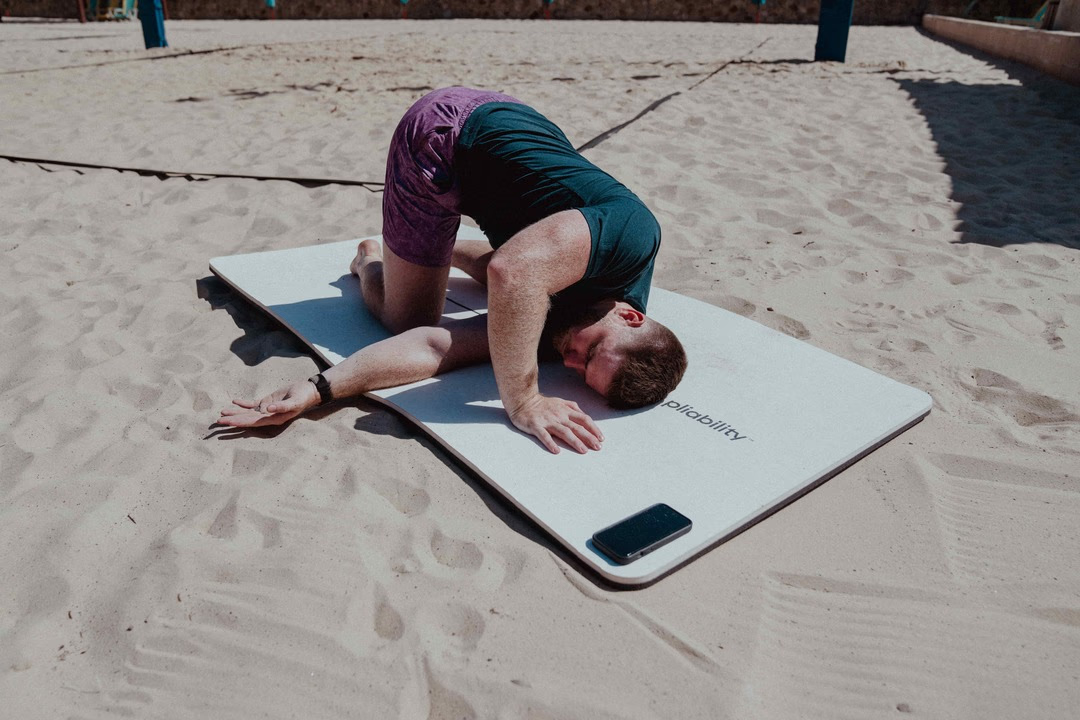
5. Child’s Pose with Side Reach: Lower Back Relief
We wrap up this quick 5 minute recovery stretches for busy athletes with a variation of a classic. The Child's Pose with a side reach is the ultimate "cool down" move. It shifts the body into an active recovery state by decompressing the spine and stretching the quadratus lumborum (QL) and lats.
Best For: Everyone, especially after heavy deadlifts or long runs. Why it works: This stretch targets the lateral line of the body. By reaching to the side, you open up the rib cage and allow for deeper breathing, which further engages the parasympathetic nervous system. It is one of the most effective muscle recovery stretches for calming the body down after a high-cortisol workout. How to do it:
- From a kneeling position, sit back on your heels and fold forward, resting your forehead on the floor.
- Walk both hands as far as you can to the right side until you feel a stretch along your left side.
- Breathe deeply into your left lung.
- Walk your hands back through the center and repeat on the left side.
Hold Time: 30 seconds per side.
Beyond Stretching: The Holistic Recovery Triad
Stretching is only one piece of the performance puzzle. To truly fix stiffness, you must address recovery from three different angles: mechanical, metabolic, and neurological.
Mechanically, you should supplement your muscle recovery stretches with myofascial release. Using a foam roller for 30 to 60 seconds on major muscle groups can break up adhesions that static stretching might miss. Metabolically, your body requires raw materials to repair the tissues you just stretched. A good rule of thumb for protein intake is to consume your body weight in lbs multiplied by 0.36 to find your minimum daily requirement.
Finally, neurological recovery is the most overlooked. You can do all the flexibility exercises for stiffness in the world, but if you aren't getting 7-9 hours of quality sleep, your nervous system will remain in a state of high alert, keeping your muscles tight. Remember, a 12-week passive stretching program has been shown to improve blood vessel function and decrease blood pressure, but these benefits are only realized when the body is given time to actually adapt.
FAQ
What are the best stretches for muscle recovery?
The best stretches focus on large muscle groups and joint capsules. Movements like the Dragon Pose for hips, the 90/90 Hip Switch for joint rotation, and the Thoracic Bridge for spinal health are top-tier choices. These stretches increase blood circulation and help transition the body from a sympathetic (fight or flight) state to a parasympathetic (rest and digest) state.
How long should you hold a stretch for recovery?
The American College of Sports Medicine suggests that 10 to 30 seconds is the ideal window for most adults to improve joint range of motion. For deeper fascia work or chronic stiffness, you may benefit from holding positions for up to 2 minutes, provided there is no sharp pain.
Is it better to stretch before or after a workout?
Static stretching is best performed after a workout when the muscles are warm and more pliable. Stretching a "cold" muscle before a workout can actually decrease power output and increase injury risk. Instead, use a dynamic warm-up before your session and save your muscle recovery stretches for the post-workout cool-down.
Does stretching actually help sore muscles?
Research suggests the effect on soreness itself is minimal. A meta-analysis indicated that stretching reduces muscle soreness by less than one point on a 100-point scale. However, stretching is vital for maintaining muscle elasticity and range of motion, which prevents the secondary stiffness that often accompanies DOMS.
Should I stretch if my muscles are very sore?
Yes, but keep it gentle. Light movement and stretching for sore muscles can promote blood flow, which delivers nutrients to damaged tissues. However, if the soreness is so intense that your movement is significantly impaired, focus on light active recovery like walking rather than deep, intense static holds.
Optimize Your Recovery Journey
Consistency is the secret sauce in fitness. You won't fix years of desk-bound stiffness in a single session. Aim to perform this post-workout mobility routine at least 3-4 times per week to see real changes in your athletic performance and daily comfort. By integrating these muscle recovery stretches into your lifestyle, you are investing in the long-term longevity of your joints.
Stay disciplined with your recovery, listen to the 3-Day Rule, and remember that mobility is a skill that must be practiced. If you are ready to take your training to the next level, start today with just five minutes of focused movement. Your body will thank you tomorrow.