
Quick Facts
- Recovery Timeline: Approximately 60% of patients with sciatica experience significant recovery within six weeks through conservative care.
- Success Metric: Look for pain centralization, where discomfort moves from the leg or calf up toward the lower back.
- Primary Protocol: Perform movements gently, aiming for a 30-second hold or 10 to 15 rhythmic repetitions.
- Core Focus: Prioritize activating deep stabilizers like the transverse abdominis to support the lumbar spine.
- Expert Insight: Active exercise therapy is significantly more effective at reducing the duration of symptoms compared to passive bed rest.
- Prevalence: Research indicates that up to 40% of individuals will experience sciatica at some point during their lifetime.
Effective sciatica stretches focus on centralizing pain and reducing nerve compression. Key techniques include the McKenzie Method and nerve flossing. Safe relief for sciatic nerve pain involves gentle movements that avoid aggravating the lumbar spine. Beginners should prioritize rhythmic nerve flossing and pelvic stability exercises over aggressive static stretching to ensure pain centralizes toward the spine.
Sciatica vs. Piriformis Syndrome: The Self-Check
Before you dive into a training program, you need to understand the mechanical cause of your discomfort. True sciatica typically stems from the lumbar spine, specifically issues at the L4-L5 vertebrae or L5-S1 levels, where a disc may be encroaching on the nerve root. This is often referred to as radiculopathy. However, if the nerve is being pinched by a tight muscle in the gluteal region, you might be dealing with piriformis syndrome.
To differentiate between the two, we use specific diagnostic tools like the FAIR test (Flexion, Adduction, and Internal Rotation). Lay on your side with the affected leg on top. Bend your top knee and bring it toward your chest, then gently pull it down toward the floor. If this recreates the familiar radiating pain in your glute, a piriformis stretch for sciatica may be your best starting point. Another option is the Pace maneuver, which involves resisted abduction of the hip while sitting.
Understanding whether the issue is disc-related or muscle-related changes how you approach your recovery. Spinal-based pain often responds better to directional preference exercises, while muscle-based compression requires targeted piriformis muscle stretches for sciatic nerve pain. Regardless of the cause, the goal remains the same: inflammation reduction and restoring functional mobility.
Phase 1: Directional Preference and the McKenzie Method
In the initial stage of recovery, we prioritize spinal decompression and finding your directional preference. For most people with a disc-related issue, the preference is extension. This is the foundation of the McKenzie method exercises for sciatica relief. The objective here is not just to increase your range of motion, but to facilitate pain centralization. This means that even if your back feels slightly more "stiff," it is a win if the pain leaves your foot or calf and moves into your glute or lower back.
Start with the Prone Prop. Lie on your stomach on a firm surface. Slowly prop yourself up on your elbows. If this feels manageable and the pain doesn't move further down your leg, progress to the Prone Press-up. Use your hands to push your upper body off the floor while keeping your pelvis relaxed and heavy. Perform 10 repetitions, holding the top position for just 2 seconds.
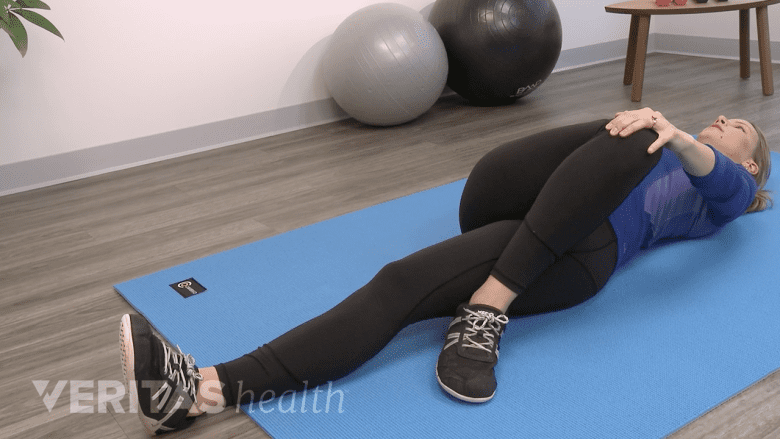
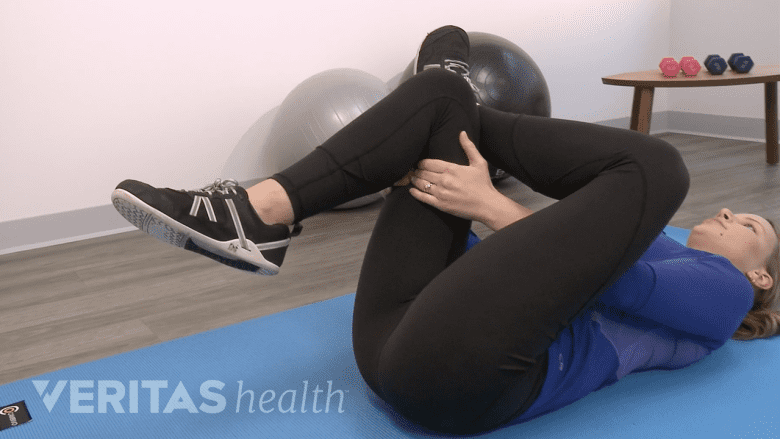
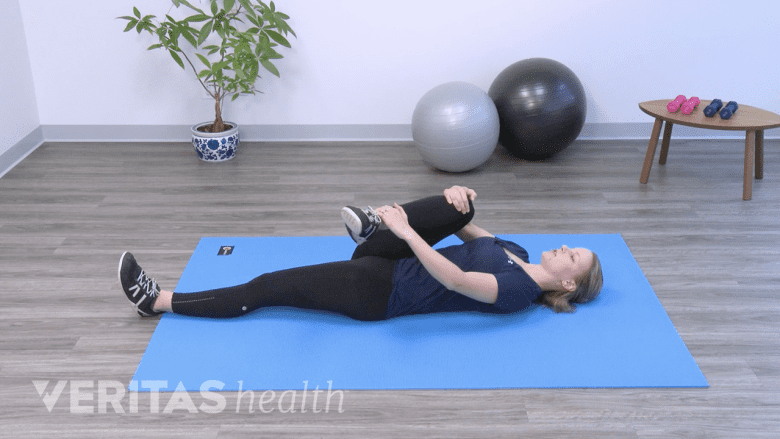
If extension makes your pain worse, you may have a flexion preference. In this case, try the single knee-to-chest stretch. Lay on your back and gently pull one knee toward your chest. Hold for a 30-second hold and perform 3 repetitions. These sciatic nerve relief exercises are designed to create space in the lumbar spine and reduce the mechanical pressure on the neural tissue.
Phase 2: Neural Mobilization with Nerve Flossing
Once the acute "lightning bolt" pain has stabilized, we shift our focus to neural mobilization. Nerves do not like to be stretched like muscles; they prefer to glide. When a nerve is irritated, it can become tethered by inflammation or scar tissue. We use a technique called nerve flossing to slide the nerve through the spinal canal and around the surrounding tissues without putting it under excessive tension.
To learn how to perform nerve flossing for sciatica, sit in a chair with your back slumped slightly. Straighten your affected leg while simultaneously looking up at the ceiling. Then, as you bend your knee back down, tuck your chin to your chest. This rhythmic "seesaw" movement pulls the nerve toward the head and then toward the foot.
The key to safe sciatica stretches for beginners at home is to avoid "no pain, no gain" mentalities. If you feel a sharp pull or increased tingling, you are pulling too hard. Think of this as a gentle mobilization rather than a deep stretch. This technique helps maintain hamstring flexibility while ensuring the nerve stays mobile within its sheath. Perform 15 repetitions in a slow, controlled rhythm, 2 to 3 times per day.
Phase 3: Long-term Core Stabilization and Recovery
The final step in a results-driven recovery plan is building a "natural brace." Stretching alone won't prevent the pain from returning; you need to stabilize the lumbar spine. We focus on deep stabilizers, particularly the transverse abdominis and the multifidus. These muscles act as an internal corset, keeping the L4-L5 vertebrae aligned during movement.
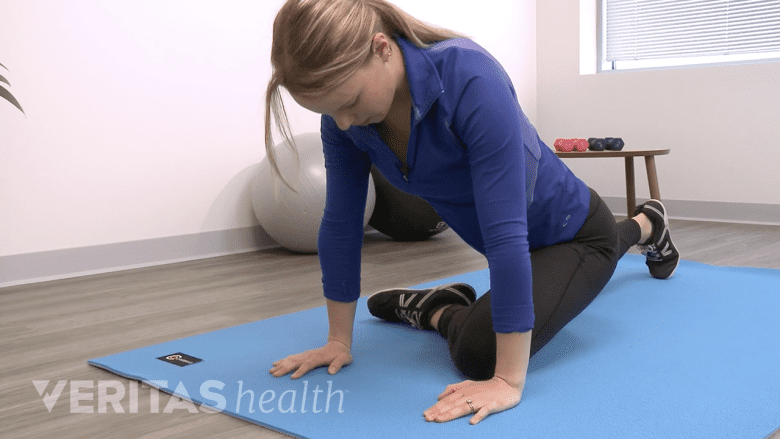
A staple for core strengthening exercises for chronic sciatica recovery is the Bird-Dog. Start on all fours with a neutral spine. Simultaneously reach your right arm forward and your left leg back. The goal is to keep your hips perfectly level—imagine a glass of water resting on your lower back that you cannot spill. Hold for 5 seconds and switch sides. Perform 3 sets of 10 repetitions.
As your functional mobility improves, incorporate pelvic tilts and dead bugs to further challenge your stability. Remember that the signs sciatica stretches are working and centralizing pain include increased tolerance for sitting and walking. By combining safe stretching for sciatic pain with progressive loading, you transition from simply managing a symptom to bulletproofing your back against future flare-ups.
FAQ
What are the best stretches for sciatica pain relief?
The most effective stretches depend on the source of the pain, but generally, the McKenzie Method press-ups and nerve flossing are the gold standard. Press-ups help with disc-related compression by encouraging the disc material to move away from the nerve, while nerve flossing improves the nerve's ability to glide through tight tissues.
Can stretching make sciatica pain worse?
Yes, aggressive static stretching can aggravate an inflamed nerve. If you perform a stretch and the pain moves further down your leg (peripheralization), stop immediately. The goal is to find movements that help the pain move toward your spine, not away from it. Avoid deep forward folds or heavy hamstring stretches during the acute phase.
How long does it take for sciatica stretches to work?
While some people feel immediate relief from directional preference exercises, a full recovery usually takes time. Clinical data suggests that most patients see significant improvement within six to twelve weeks of consistent, conservative care. Consistency with your daily routine is the most important factor in seeing long-term results.
What exercises should you avoid if you have sciatica?
In the early stages, avoid heavy squats, deadlifts, and high-impact activities like running, which can increase spinal loading. You should also be cautious with straight-leg raises or toe touches, as these put the sciatic nerve under maximum tension, which can increase neural inflammation.
Is it better to rest or walk with sciatica?
Modern sports medicine favors movement over bed rest. While a day of rest might be necessary during the peak of a flare-up, gentle walking is usually highly beneficial. Walking promotes blood flow to the spinal structures and helps prevent the muscles from guarding or spasming, which can accelerate the healing process.
Is heat or ice better for sciatica pain?
Ice is generally recommended during the first 48 to 72 hours of a flare-up to help with inflammation reduction. After the initial acute phase, heat can be very effective for relaxing tight muscles like the piriformis or the paraspinals, which may be contributing to the overall pain cycle.