Quick Facts
- Primary Targets: Pectoralis major and Latissimus dorsi
- Secondary Targets: Serratus anterior and Triceps brachii
- Experience Level: Intermediate
- Equipment: Single dumbbell and flat weight bench
- Safety Note: Limit lowering to parallel with the torso to protect the shoulder capsule
- Best For: Improving upper body width, chest thickness, and shoulder stability
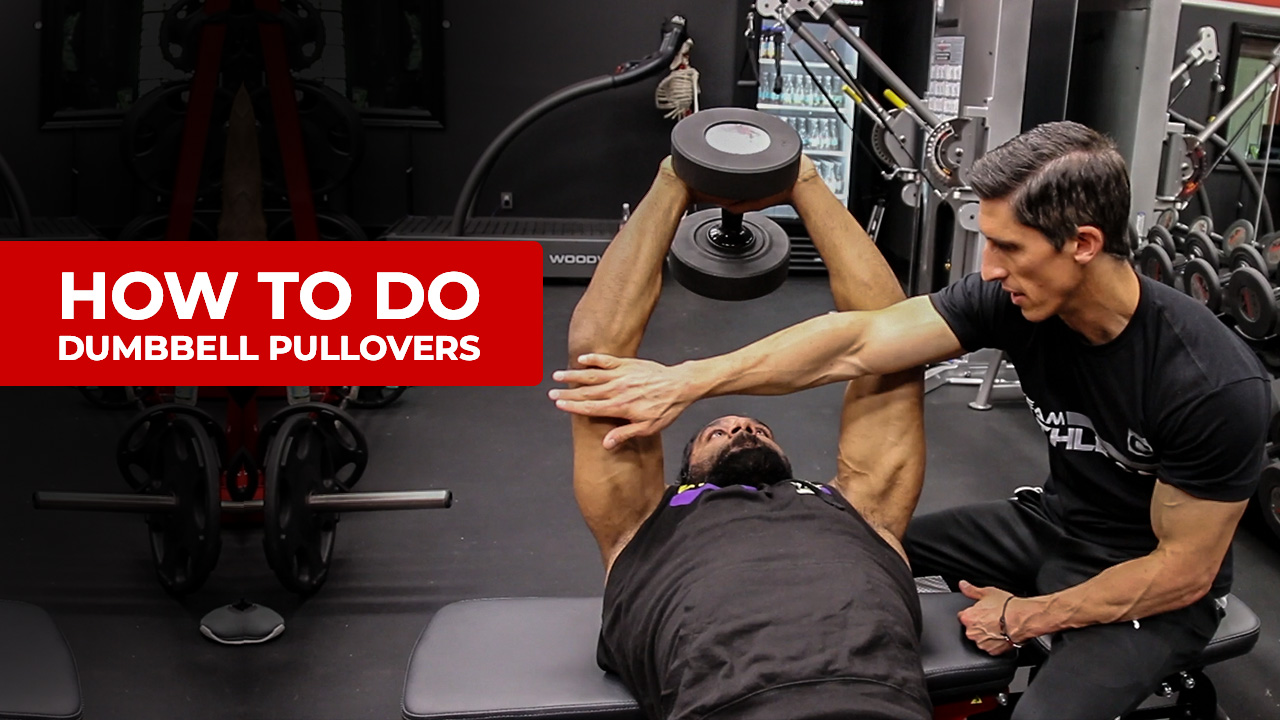
To achieve the best results with your dumbbell pullover form, lie across a flat bench with your upper back supported, maintain a slight elbow bend, and focus on a controlled 3-4 second eccentric stretch during the lowering phase. By keeping your feet flat on the floor and engaging your core, you create a stable foundation that allows the Pectoralis major and Latissimus dorsi to drive the movement safely and effectively.
The Ultimate Dumbbell Pullover Setup Guide
Success in the pullover begins long before you move the weight. The foundation of the movement is your interaction with the weight bench and how you position your center of gravity. Most athletes fail because they treat the setup as an afterthought, leading to wasted energy and potential strain on the lower back.
There are two primary ways to set up: lying lengthwise on the bench or the "perpendicular bridge." For maximum hypertrophy and ribcage expansion, the perpendicular bridge is often preferred. In this setup, only your shoulder blades and neck are in contact with the bench. This allows your hips to drop slightly, creating a larger arc and a more significant eccentric stretch.
Proper bench placement for dumbbell pullovers is critical for scapular stability. Ensure the bench is not sliding and that your upper traps are firmly anchored. Once positioned, pick up the dumbbell and hold it with a diamond grip—overlap your thumbs and index fingers to create a "web" that cradles the underside of the top plate. This grip ensures the weight stays secure even as it moves behind your head.
Before you begin the first rep, check your posture. Your feet must be flat on the ground, driven into the floor to engage your glutes. This stabilizes the pelvis. Many lifters allow their lower back to arch excessively, which shifts the tension away from the target muscles and onto the lumbar spine. Think about "knitting" your ribs down toward your belly button. This maintains a neutral spine and keeps the focus on the dumbbell pullover setup guide principles of stability and safety.
Step-by-Step Execution: Master the Movement
Once your setup is locked in, it is time to execute the movement with precision. Start with the dumbbell held directly over your chest, arms extended but not locked out. This is your home base. From here, the quality of the rep is determined by how you handle the descent.
The first phase is the eccentric stretch. Lower the weight slowly in a wide arc behind your head. This should take 3 to 4 seconds. As the weight moves back, the dumbbell pullover muscle engagement shifts heavily toward the lats and the serratus anterior. You should feel a deep lengthening across your ribcage. However, do not go too far. The ideal range of motion for dumbbell pullovers usually ends when your upper arms are parallel with your torso. Going deeper can put the shoulder joint in a compromised mechanical position without adding significant muscle-building benefits.
After reaching the bottom of the arc, initiate the upward phase by thinking about your elbows. Instead of just pulling with your hands, drive your elbows toward your hips. This "pull-through" technique is essential for ensuring the lats and pectorals do the work rather than the triceps. Maintain that slight bend in your elbows throughout the entire path. If you find your arms straightening or bending more as you move, you are likely losing tension in the target muscles and relying on momentum.
Chest vs. Back: Customizing Your Form
One of the most common questions in the gym is whether the pullover is a chest or back exercise. The truth is, it is both, but you can tilt the scales by adjusting your mechanics. Biomechanical research shows that the dumbbell pullover primarily targets the Pectoralis major over the Latissimus dorsi, with some electromyographic studies showing a chest-to-back activation difference of approximately 90%. However, your intent and small technical shifts change the outcome.
To understand the difference between chest and back dumbbell pullover form, look at the following comparison:
| Feature | Chest Focus | Back (Lat) Focus |
|---|---|---|
| Elbow Position | Tucked slightly inward | Flared slightly out or neutral |
| Range of Motion | Stop when weight is over the chin | Pull all the way to the belly/lower chest |
| Hips | Kept high and level with the bench | Dropped slightly lower to increase stretch |
| Mental Cue | Squeeze the chest at the top | Pull through the elbows |
If you want to know how to target chest with dumbbell pullovers, focus on the "squeeze." As you bring the weight back up, act as if you are trying to crush the dumbbell between your palms. This isometric pressure increases the engagement of the sternal fibers of the chest. Interestingly, performing the dumbbell pullover with elbow extension has been shown to result in greater muscle activation in the sternal portion of the Pectoralis major compared to the clavicular portion.
For a lat focused dumbbell pullover technique, the goal is the eccentric stretch. By dropping your hips an inch or two as the weight goes back, you put the Latissimus dorsi under an extreme stretch. When you pull the weight back up, stop just before the dumbbell is over your face to keep constant tension on the lats. If you bring the weight all the way over your chest, the gravity line changes and the lats get a "rest," which is what we want to avoid for hypertrophy.
Safety First: Common Mistakes and Injury Prevention
While the pullover is a powerhouse for building the upper body, it can be unforgiving if done incorrectly. The shoulder is a highly mobile but delicate joint. Most common dumbbell pullover mistakes involve trying to use too much weight too soon or ignoring the limits of one's own shoulder mobility.
A major concern is preventing shoulder injury in dumbbell pullovers. The long head of the triceps brachii exhibits high levels of activation throughout the movement, often exceeding the activation of the chest fibers regardless of elbow position. This means your triceps are working hard to stabilize the weight. If they fatigue, the weight can pull your shoulder into an unsafe range of motion. Always use a weight that you can control for the full 3-second descent.
Another mistake is "rib flaring." If your ribcage pops up as the weight goes back, you have lost core tension and are likely straining your lower back. Keep your abs tight—think about doing a mini-crunch while lying on the bench. This protects the spine and forces the Pectoralis major and lats to do the actual lifting.
If you have a history of rotator cuff issues or impingement, proceed with caution. Start with a very light weight to test your comfortable range of motion. If you feel any sharp pain or "pinching" in the front of the shoulder, shorten the arc or substitute the movement with a cable pullover, which offers more consistent tension and can be easier on the joints.
FAQ
What muscles does the dumbbell pullover target?
The dumbbell pullover primarily targets the Pectoralis major (chest) and the Latissimus dorsi (back). It also heavily involves the Serratus anterior, which are the finger-like muscles on the side of your ribs, and the long head of the Triceps brachii for stabilization.
Is the dumbbell pullover for chest or back?
It can be used for both. Biomechanically, it tends to activate the chest more significantly during the contraction phase, but the deep stretch makes it an excellent movement for the lats. Your form, specifically where you stop the weight and how you cue your elbows, determines which muscle group takes the lead.
Are dumbbell pullovers bad for your shoulders?
Not inherently, but they require good shoulder mobility. If you have poor flexibility or go beyond your active range of motion, you risk straining the rotator cuff or the labrum. Staying within a controlled range where your arms are parallel to your torso is the safest approach.
How far back should you lower the weight in a pullover?
You should lower the weight until your upper arms are roughly in line with your ears or parallel to the floor. Going further than this increases the risk of shoulder impingement without providing a meaningful increase in muscle hypertrophy for most lifters.
Should arms be straight or bent during a dumbbell pullover?
Your arms should have a slight, fixed bend at the elbows—roughly 10 to 15 degrees. They should not be perfectly straight, as this puts excessive strain on the elbow joint, nor should they be bent so much that the movement becomes a triceps extension. Keep the angle locked throughout the set.