Quick Facts
- Safety Status: Highly risky for those with nasal congestion or undiagnosed sleep apnea.
- Evidence Quality: Systematic reviews categorize current research as poor quality due to small sample sizes of only about 233 patients globally.
- Primary Benefit: Increases nitric oxide production by encouraging nasal breathing.
- Efficacy: Shows a 47% reduction in Apnea-Hypopnea Index for mild obstructive sleep apnea in specific clinical trials.
- Core Verdict: Mouth taping is not a standalone cure for sleep disorders but may serve as an adjunct therapy for mild snoring; however, mouth tape safety precautions must be followed to avoid drops in oxygen saturation levels.
Mouth taping has taken social media by storm, but does it actually work? While the practice aims to promote the benefits of nasal breathing, it carries significant safety risks if done incorrectly. We analyze the scientific evidence behind mouth taping for sleep efficacy and safety.
Mouth taping carries significant safety risks, particularly for individuals with nasal congestion, a deviated septum, or allergic rhinitis. Obstructing the mouth when the nasal passage is blocked can lead to breathing difficulties or reduced oxygen saturation. It is crucial to ensure clear nasal passages and consult a healthcare professional before attempting this practice to avoid respiratory complications.
Viral Hype vs. Scientific Reality: Does it Work?
If you scroll through wellness TikTok, you will likely see influencers claiming that a simple piece of tape over the lips is the secret to deep sleep, a defined jawline, and boundless energy. These social media claims often cite a 36% improvement in refreshing sleep. However, the scientific community views these viral trends with a healthy dose of skepticism. While the anecdotal evidence is loud, clinical data remains relatively quiet and localized to very specific populations.
The primary metric used by sleep scientists is the Apnea-Hypopnea Index, which measures how many times your breathing stops or slows down per hour. In a clinical study involving 20 patients with mild obstructive sleep apnea, researchers found that mouth taping reduced the median apnea/hypopnea index by 47%, decreasing the score from 8.3 to 4.7 events per hour. While this sounds promising, it is important to note that these participants had very mild cases. For those with moderate to severe sleep-disordered breathing, mouth taping is generally not a recommended clinical intervention.
Furthermore, a systematic review of 10 scientific studies covering 213 patients found that while some markers improved, four of the studies specifically warned of the risk of asphyxiation during sleep. Most doctors agree that if mouth taping has a place, it is often as an adjunct to other therapies, such as Mandibular Advancement Devices, rather than a primary cure-all.
| Social Media Claim | Scientific Evidence |
|---|---|
| Cures all forms of sleep apnea. | Only shows potential for mild obstructive sleep apnea. |
| Safe for everyone to try. | High risk of asphyxiation if the nose is blocked. |
| Instantly stops all snoring. | 65% of participants saw a snoring index reduction of at least 50%. |
| Boosts oxygen levels significantly. | Can actually cause oxygen saturation levels to drop if done unsafely. |
Nasal vs. Mouth Breathing: The Physiological Benefits
To understand why people are taping their mouths shut, we have to look at the benefits of nasal breathing vs mouth breathing during sleep. Our noses are designed specifically for respiration. They act as sophisticated filtration systems, warming and humidifying the air before it reaches the lungs. This process reduces the likelihood of upper airway resistance, which is a common trigger for snoring and fragmented sleep.
One of the most significant advantages of breathing through the nose is the production of nitric oxide. This molecule is produced in the paranasal sinuses and plays a vital role in vasodilation, which helps improve the efficiency of oxygen transport throughout the body. When comparing nasal vs mouth breathing sleep patterns, mouth breathers often wake up with a dry mouth, sore throat, and higher levels of dental plaque because the protective saliva dries out.
By encouraging the mouth to stay closed, mouth taping aims to force the body to utilize the nasal passage. However, if your nose is structurally compromised or inflamed, forcing this transition can be counterproductive and even dangerous.
The Risks: When Mouth Taping Becomes Dangerous
The trend of mouth taping is not without its hazards. The most immediate concern is the health risks of mouth taping with nasal congestion. If you cannot breathe through your nose and your mouth is taped shut, your body will struggle to maintain adequate oxygenation. This can lead to a state where your blood oxygen saturation levels drop below the critical 90% threshold, potentially causing strain on the heart and brain.
There are several conditions where you should absolutely avoid this practice:
- Deviated Septum: A physical blockage in the nose that makes nasal breathing difficult or impossible.
- Allergic Rhinitis: Inflammation from allergies that causes significant swelling in the nasal passages.
- Asthma or Chronic Lung Disease: Any condition that already compromises your respiratory drive.
- Undiagnosed Sleep Apnea: If you have severe sleep-disordered breathing, taping your mouth could mask the symptoms while the underlying condition continues to damage your health.
You should know the signs you should stop mouth taping immediately. If you wake up feeling panicked, have a headache, or notice skin irritation around your lips, the practice is likely doing more harm than good. Using non-medical tape can also lead to painful rashes or even tear the sensitive skin of the lips.
The ENT Safety Check: The 2-Minute Nasal Test
Before you even consider purchasing hypoallergenic adhesive strips, you must ensure your nose is up to the task. Many people are mouth breathers simply because their nasal passages are chronically obstructed. Taping your mouth without clearing your nose is like trying to drive a car with a blocked exhaust pipe.
The 2-Minute Nasal Test: Sit comfortably in an upright position. Close your mouth and breathe exclusively through your nose for two full minutes. If you feel any sense of panic, shortness of breath, or a feeling that you aren't getting enough air, you are not a candidate for mouth taping. This often indicates an underlying issue like a deviated septum or nasal polyps that requires a visit to an Ear, Nose, and Throat (ENT) specialist.

If you pass this test, you might consider mouth taping as a tool for sleep hygiene optimization, but it should still be approached with caution. Many sleep experts suggest starting with myofunctional therapy—exercises designed to strengthen the tongue and orofacial muscles—to naturally encourage the mouth to stay closed during sleep without the need for tape.
Best Practices: How to Safely Start Mouth Taping
If you have consulted with a professional and confirmed that your nasal passages are clear, you must follow specific best practices for using mouth tape for snoring. Safety should always be your first priority.
- Choose the Right Materials: Never use duct tape, masking tape, or standard Scotch tape. Only use hypoallergenic adhesive strips specifically designed for human skin.
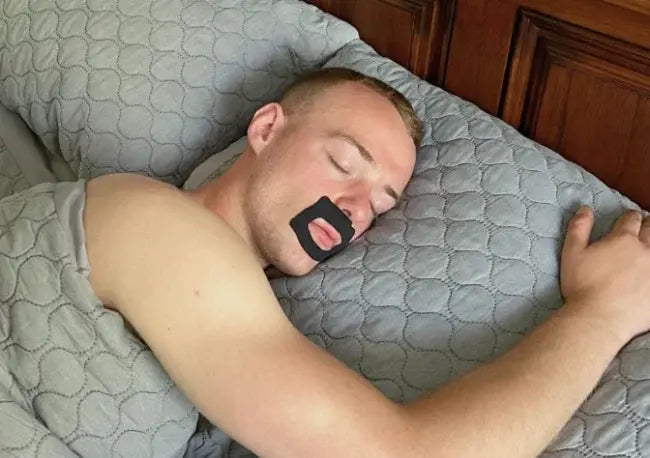
- The Vertical Method: Instead of taping your entire mouth shut horizontally (the "hostage" look), place a small strip of tape vertically across the center of your lips. This allows a small amount of space on the sides of your mouth to remain open, which acts as a safety valve if you need to take an emergency breath.
- Start Small: Try wearing the tape for 30 minutes during the day while you are reading or watching TV. This helps you get used to the sensation of forced nasal breathing while you are awake and in control.
- Maintain Your Routine: Mouth taping is not a substitute for clinical treatments. If you have been prescribed a CPAP machine, do not stop using it in favor of mouth taping.
Remember, the goal of mouth taping is to train the body over time. It is a tool to help you transition into better habits, not a permanent fix for a damaged respiratory system.
FAQ
Is mouth taping safe to do?
Mouth taping can be safe for healthy individuals with completely clear nasal passages, but it carries significant risks for those with respiratory issues. It should never be done without first ensuring you can breathe comfortably through your nose for extended periods. Individuals with allergies, a deviated septum, or severe sleep apnea should avoid it due to the risk of reduced oxygen levels.
What are the benefits of mouth taping at night?
The primary goal is to encourage nasal breathing, which filters air and increases nitric oxide production. This can lead to reduced dry mouth in the morning, better dental health by preserving saliva, and potentially more restful sleep for those who are habitual mouth breathers but have no underlying medical obstructions.
Does mouth taping actually stop snoring?
It can reduce snoring in some individuals by preventing the vibration of tissues in the mouth and throat. Clinical studies have shown that about 65% of mild snorers experience a reduction in their snoring index by at least 50% when using mouth tape. However, it does not address the root cause of snoring if it originates from the nose or deeper in the airway.
Can mouth taping help with sleep apnea?
There is limited evidence that mouth taping can help with very mild cases of obstructive sleep apnea by improving the Apnea-Hypopnea Index. However, it is not a clinical treatment for moderate to severe apnea. If you suspect you have sleep apnea, a formal sleep study and treatments like CPAP or myofunctional therapy are the gold standards.
How do you safely tape your mouth for sleep?
To safely start mouth taping for sleep, use only medical-grade, hypoallergenic adhesive strips. Apply the tape vertically across the center of the lips rather than horizontally. This ensures that if your nose becomes blocked during the night, you can still draw breath through the corners of your mouth.
Are there side effects to mouth taping?
Potential side effects include skin irritation or allergic reactions to the adhesive, disrupted sleep due to anxiety, and most dangerously, a drop in oxygen saturation if the nasal airway is obstructed. Some people also experience "sleep-fragmentation" as they wake up feeling the need to remove the tape.