Quick Facts
- Optimal Frequency: 2-3 times per week at the start of a session.
- Sets and Reps: 5 sets of 3 reps at 75% of your one-rep max (1RM) for explosive power.
- Peak Power Load: 70% to 80% of your one-repetition maximum.
- Primary Benefit: Increases explosive power via the triple extension of the hips, knees, and ankles.
- Beginner Standard: Aim to lift 75% to 100% of your body weight for an intermediate benchmark.
- Key Focus: Prioritize technical efficiency and barbell trajectory over heavy loading during the initial learning phase.
To effectively add power cleans to a strength routine, schedule them at the beginning of your Power Clean Workout when the central nervous system is fresh and energy levels are highest. They are most effective when performed 2 to 3 times per week, focusing on the triple extension of the hips, knees, and ankles. Beginners should prioritize mastering the barbell trajectory and catching position before increasing the load to ensure safety and technical efficiency. For maximum gains, aim for 3-5 sets of 1-5 reps at 70-80% of your one-rep max to maximize explosive power and vertical jump.
The Benefits: Why Every Athlete Needs a Power Clean Workout
If you are looking to bridge the gap between absolute strength and true athletic performance, the Power Clean Workout is your most effective tool. In the world of performance training, we often discuss the force-velocity curve. While heavy deadlifts and squats build the force side of that curve, the power clean trains your ability to apply that force rapidly. This is known as kinetic energy transfer, and it is the difference between being "gym strong" and "game fast."
The power clean forces the body to move a heavy load at high speeds, which requires intense posterior chain engagement. For athletes in sports like MMA, the ability to snap the hips forward translates directly into more powerful takedowns and strikes. For golfers, it means more clubhead speed through better ground force production. Even for sprinters, the triple extension mechanics—the simultaneous extension of the hips, knees, and ankles—mimic the propulsion phase of a stride.
Beyond the specific sports applications, this movement provides explosive power training benefits that are hard to replicate with traditional slow-speed lifts. Research indicates that the highest peak power output in the power clean is typically achieved when using training loads between 70% and 80% of an individual's one-repetition maximum (1RM). By training in this "sweet spot," you teach your nervous system to recruit motor units faster, leading to significant benefits of power cleans for vertical jump height and overall sprint speed.
Step-by-Step Form for Beginners
Mastering power clean form for beginners is about understanding that the lift is a vertical jump with a barbell in your hands, not a reverse curl. Success starts with a disciplined setup and a commitment to the correct barbell trajectory. If the bar drifts too far away from your body, you lose leverage; if it crashes on your collarbones, you risk injury.

The Setup and First Pull
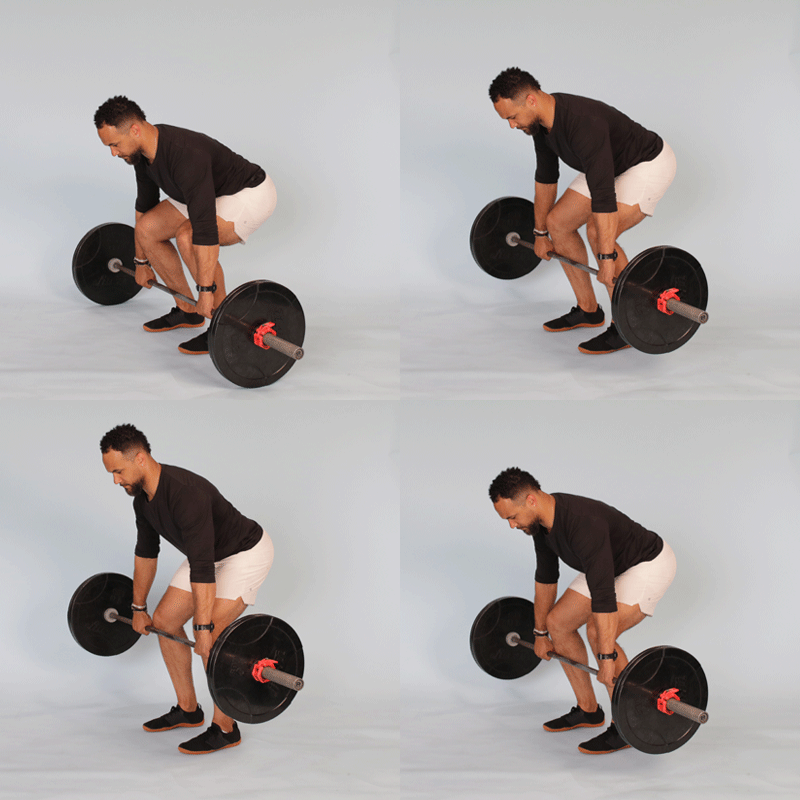
Your feet should be roughly hip-width apart, with your shins about an inch away from the bar. Grip the bar just outside your legs using the hook grip technique—tucking your thumb under your index and middle fingers. This grip is essential for maintaining control as the bar accelerates. Your back must be flat, chest up, and shoulders slightly ahead of the bar.
The first pull is not a violent jerk. Instead, think of it as a controlled push away from the floor with your legs. Maintain a 4-second tempo rule during the floor pull when you are first learning; this ensures your hips and shoulders rise at the same rate. Keep the bar close to your shins and move your knees back out of the way.
The Scoop and Triple Extension
Once the bar passes your knees, you enter the "scoop" or second pull. This is where the magic happens. You shift your weight slightly toward your mid-foot and rapidly drive your hips forward to meet the bar at the mid-thigh. This is the moment of triple extension. You are looking for a violent, simultaneous snap of the hips, knees, and ankles. If you do it correctly, your body will be fully extended, and the bar will gain massive vertical momentum.
The Catch
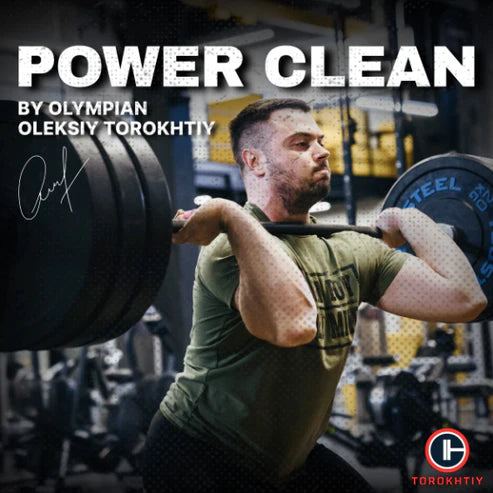
The final phase is the catch. As the bar reaches its peak height, you must pull yourself under it. This requires a fast wrist turnover, whipping your elbows forward and up to create a "shelf" with your anterior deltoids. This is the catching position. In a power clean, you catch the bar in a quarter-squat rather than a full deep squat. Ensure your core is braced to absorb the weight.
How to Program Power Cleans into a Strength Routine
Knowing how to program power cleans into a strength routine is just as important as knowing how to perform the lift. Because this movement is so demanding on the central nervous system, or CNS recovery, you cannot treat it like a set of bicep curls. You need high intensity but low volume.
If you are looking at how to add power cleans to a 5x5 workout, the most common approach is to swap out one of the deadlift sessions or incorporate them as the very first movement on your "A" day. A classic power clean sets and reps scheme for athletic performance is 5 sets of 3 reps. This allows for enough volume to practice the skill without the technical breakdown that occurs during higher-repetition sets.
When deciding between the hang power clean vs power clean for explosive power, beginners should often start with the hang version (starting from the knees). This simplifies the movement by removing the complexities of the first pull from the floor. However, once you master the floor start, the full power clean offers superior total-body recruitment.
To see consistent progress, follow a 4-week progression model. Standard athletic benchmarks suggest that intermediate lifters should aim to power clean 75% to 100% of their body weight, while advanced athletes often achieve lifts between 1.0 and 1.5 times their body weight.
| Week | Focus | Sets x Reps | Intensity (% of 1RM) |
|---|---|---|---|
| 1 | Technique & Speed | 5 x 3 | 60% - 65% |
| 2 | Power Output | 5 x 3 | 70% - 75% |
| 3 | Heavy Loading | 4 x 2 | 80% - 85% |
| 4 | Peak / Deload | 3 x 1 / 3 x 3 | 90% / 50% |
Mobility, Mistakes, and Assistance Exercises
The biggest hurdle for most people isn't strength; it's improving front rack mobility for power cleans. If you have tight lats or poor thoracic mobility, you won't be able to get your elbows high enough to catch the bar safely. This leads to the bar crashing on your wrists or collarbones. Spending five minutes on dynamic wrist stretches and "prayer" lat stretches before your session can make a massive difference.
One of the most common power clean mistakes and how to fix them involves the "donkey kick." This happens when a lifter jumps their feet out too wide and kicks their heels back violently. To fix this, focus on a "slide" rather than a jump. Your feet should move from a pulling stance to a slightly wider receiving stance, staying close to the floor.
To support your progress, integrate specific assistance exercises. Front squats are the best way to build the core stability and leg strength needed for the catch. Clean high pulls are another excellent choice, as they allow you to practice the triple extension and barbell trajectory without the stress of the catch. For those lacking hip snap, kettlebell swings are a fantastic tool to reinforce the hinging pattern.
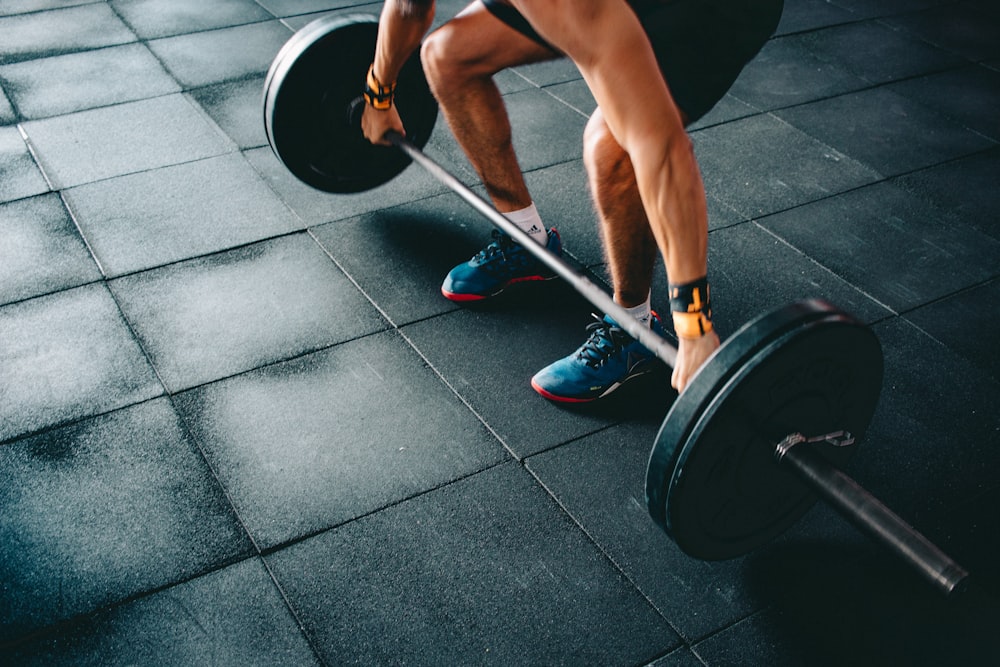
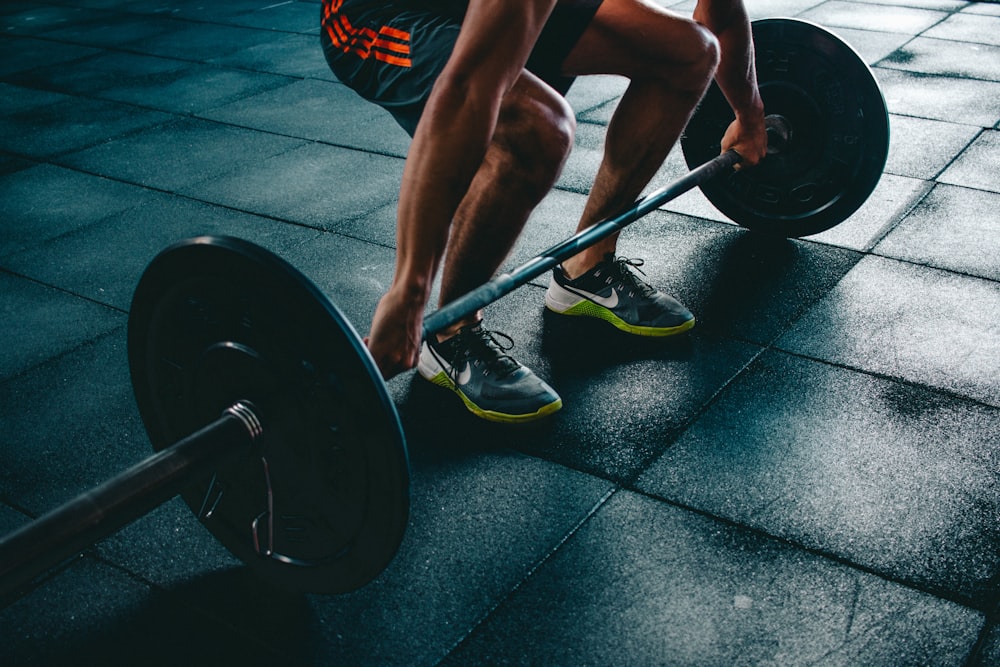
Finally, ensure you are using the right equipment. Power cleans should ideally be performed with bumper plates and a rotating Olympic bar. These tools allow you to drop the weight safely if a lift goes wrong and ensure the bar rotates smoothly during the catch, protecting your wrists from excessive torque.
FAQ
What muscles do power cleans work?
The power clean is a compound multi-joint movement that recruits almost every major muscle group. The primary movers include the glutes, hamstrings, and quadriceps during the initial pull and explosion. The spinal erectors and traps are heavily involved in maintaining a stable back and shrugging the bar upward, while the calves contribute to the final phase of the triple extension. Additionally, the forearms and shoulders work to stabilize and catch the barbell in the front rack.
How many reps of power cleans should I do?
To maximize explosive power and maintain technical integrity, you should keep the reps low, typically between 1 and 5 per set. Most athletes find that 3 reps per set is the "goldilocks" zone—enough to build a rhythm but few enough to prevent the fatigue that leads to poor form. Performing high reps of power cleans is generally discouraged because the complexity of the movement increases the risk of injury when the central nervous system becomes tired.
What are the benefits of including power cleans in a workout?
Including power cleans in your routine improves your rate of force development, which is how quickly you can produce strength. This translates to increased jumping height, faster sprint times, and better overall coordination. It also builds significant "functional" size in the upper back and traps and improves bone density due to the high-impact nature of the catch phase. For anyone following a power clean progression for beginners, the lift also serves as an excellent introduction to more complex Olympic weightlifting mechanics.
Can beginners do power cleans safely?
Yes, beginners can perform power cleans safely as long as they prioritize form over weight. It is highly recommended to start with a PVC pipe or an empty barbell to master the sequence of the lift. Using a "top-down" approach, where you practice the catch and the hang position before pulling from the floor, helps build the necessary muscle memory. If you have significant mobility restrictions in your wrists or shoulders, you should address those through assistance exercises before attempting heavy loads.
Do power cleans help with vertical jump?
Absolutely. The power clean is one of the most effective exercises for increasing vertical jump height because it specifically trains the explosive extension of the hips, knees, and ankles. This triple extension is the exact mechanical sequence required to leave the ground. By training your muscles to move a heavy barbell at high speeds, you increase the power density of your lower body, allowing you to propel your own body weight much higher into the air.