Quick Facts
- Success Rate: Approximately 80% to 90% of individuals with sciatica recover without the need for surgery by utilizing conservative treatments such as exercise and physical therapy.
- Early Recovery: Roughly 50% of acute sciatica cases resolve within six weeks when patients engage in early movement and avoid prolonged bed rest.
- Recurrence Prevention: Completing a structured 12-week core stability program after recovering from an initial episode can reduce the risk of recurrence by 50% over the following two years.
- Top Priority: The primary goal is relieving pressure on the sciatic nerve by targeting the piriformis muscle, hamstrings, and lower back.
- Safety Signal: Stop immediately if you experience foot drop, loss of bladder control, or pain that worsens with movement.
Effective sciatica exercises focus on relieving pressure on the sciatic nerve by stretching the piriformis muscle, hamstrings, and lower back. Movements like the seated spinal stretch and cat-cow improve spinal mobility and alleviate pain radiating down the legs by reducing neural tension and creating space around the lumbar vertebrae.
Sciatica by the Numbers: Why Exercise is the Best Medicine
When you feel that searing, electric pain radiating from your hip down to your toes, your first instinct might be to curl up in bed and stay there. As a performance editor, I am here to tell you that total rest is often the enemy of recovery. Statistics show that 80% to 90% of individuals find lasting relief through conservative measures like sciatica exercises rather than surgical intervention. In fact, staying active is the cornerstone of musculoskeletal health when dealing with nerve impingement.
Sciatica is not a disease in itself, but rather a symptom of an underlying issue, most commonly herniated disc management. The sciatic nerve is the longest and thickest nerve in the human body, running from your lower back, through your hips, and down each leg. When a disc protrudes or a muscle becomes chronically tight, it puts pressure on this nerve, leading to chronic pain management challenges. The key to recovery lies in neural mobilization and spinal decompression techniques that create space for the nerve to breathe. By focusing on anti-inflammatory movement, we can facilitate faster healing of the soft tissues surrounding the lumbar vertebrae.
The #1 Stretch for Immediate Nerve Relief
If I could only recommend one movement for someone struggling with piriformis muscle tension, it would be the seated spinal stretch. The piriformis muscle sits directly over the sciatic nerve. When it becomes tight or spasms, it acts like a vice on the nerve. Learning how to perform sciatica stretches safely without pain involves finding the "sweet spot" where you feel tension relief without triggering a sharp neural "zing."
To perform the seated spinal stretch:
- Sit on a firm chair with your feet flat on the floor.
- Cross your aching leg over the knee of your other leg, resting your ankle on the thigh.
- Keep your back straight and slowly lean forward from your hips.
- Hold for 20 to 30 seconds, breathing deeply into your lower back.
- Repeat 3 times on each side.
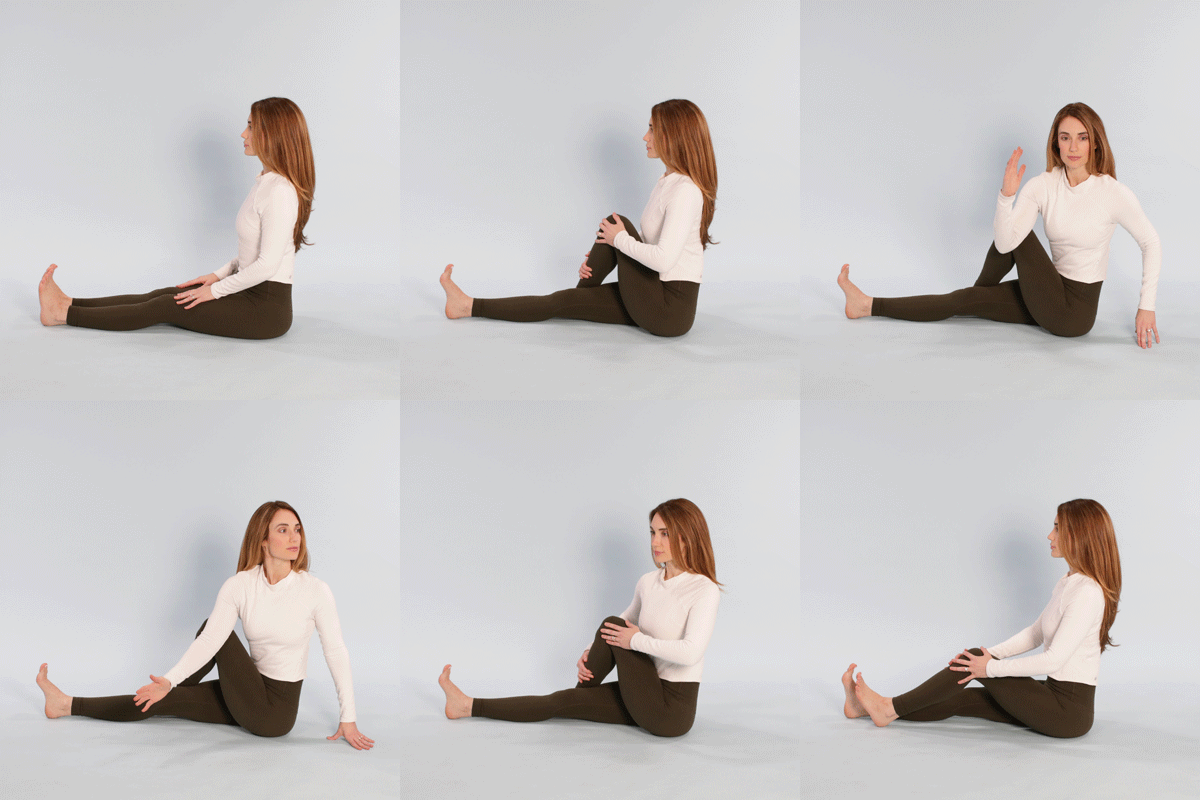
This specific movement targets functional mobility by lengthening the deep rotators of the hip. It is one of the most effective morning sciatica stretches for lower back pain because it helps reset the pelvic alignment after a night of relative immobility.
Gentle Floor-Based Stretches for Acute Pain Relief
For those in the acute phase of pain, standing can be difficult. This is where gentle sciatica stretches for beginners with limited mobility come into play. Floor-based movements allow the floor to support your body weight, reducing the load on your spine while you work on lower back and leg stretches for sciatica.
The Cat-Cow stretch is a staple for a reason. It gently cycles the spine through flexion and extension, which helps in mobilizing the lumbar vertebrae without aggressive straining. Start on your hands and knees. As you inhale, drop your belly and look up (Cow). As you exhale, arch your back like a cat and tuck your chin. Complete 10 to 15 cycles to promote circulation to the compressed nerve area.
Another vital movement is the pelvic tilt. Lie on your back with your knees bent and feet flat. Tighten your abdominal muscles so that your lower back flattens against the floor. Hold this for 5 seconds and release. This subtle movement is the foundation of lumbar stabilization, teaching your body how to support the lower spine without relying solely on global muscles that might be in spasm.
Safety Warning: If you experience a sudden loss of strength in your foot—known as foot drop—or changes in bowel or bladder function, seek emergency medical attention immediately. These are red flags that require professional medical intervention.
Strengthening Exercises for Long-Term Sciatic Nerve Health
Once the initial "fire" of the pain has subsided, we must shift the focus from sciatica relief stretches to strengthening exercises for sciatic nerve protection. If you don't build a stable foundation, the pain will likely return. Research indicates that roughly 50% of acute sciatica cases resolve within six weeks, but without rehabilitative exercises for long term sciatica recovery, the recurrence rate remains high.
Focus on gluteal activation and abdominal bracing. A strong posterior chain takes the mechanical load off your spine.
- Bird-Dog: On all fours, extend the opposite arm and leg simultaneously while keeping your hips level. This challenges your balance and forces your core to stabilize the spine.
- Glute Bridges: Lie on your back and lift your hips toward the ceiling. Squeeze your glutes at the top to ensure they are doing the work, not your lower back.
These movements are critical for herniated disc management because they train the muscles to act as a natural brace, reducing the shear force on the discs during daily tasks. Lumbar stabilization isn't just about "six-pack abs"; it's about the deep transverse abdominis providing a 360-degree support system for your musculoskeletal health.
Biomechanical Adjustments: Moving Safely Throughout the Day
Recovery doesn't happen only during your workout; it happens in the 23 hours you aren't exercising. For many, the culprit is a sedentary lifestyle. We need to implement sciatica exercises for office workers sitting all day. If you work at a desk, set a timer every 30 minutes to perform a standing hamstring stretch or a quick nerve flossing exercises for sciatica relief.
Nerve flossing is a technique used to glide the nerve through the surrounding tissues. While seated, straighten one leg and flex your foot toward your face while simultaneously tilting your head back. Then, point your toes away and tuck your chin toward your chest. This "flossing" motion helps break up adhesions and reduces neural tension without overstretching a sensitive nerve.
Additionally, consider your walking mechanics. If walking causes pain, try to shorten your stride. A longer stride increases the tension on the sciatic nerve. By taking smaller steps, you keep the nerve in a more relaxed state, allowing you to maintain your cardiovascular health without flare-ups. Combining these ergonomic adjustments with your daily sciatica exercises will significantly accelerate your recovery timeline.
FAQ
What are the best exercises for sciatica relief?
The most effective exercises combine stretching and strengthening. Key movements include the seated piriformis stretch, cat-cow for spinal mobility, and nerve flossing to reduce neural tension. Long-term relief is best achieved by adding core stability exercises like bird-dogs and pelvic tilts to protect the lower spine.
Are there exercises I should avoid with sciatica?
Avoid high-impact activities like running or jumping during a flare-up. You should also be cautious with double leg lifts or full sit-ups, as these can put excessive pressure on the lumbar vertebrae and potentially worsen a herniated disc. Any exercise that causes pain to travel further down the leg should be stopped immediately.
How long does it take for sciatica exercises to work?
Many people feel minor relief after their first session of gentle stretching. However, clinical data shows that roughly 50% of acute cases resolve within six weeks of consistent movement. For long-term prevention, a 12-week structured strengthening program is recommended.
Can walking help reduce sciatica pain?
Yes, walking is generally encouraged as it promotes circulation and helps maintain joint mobility. However, you should shorten your stride to avoid over-tensioning the nerve. If walking increases your leg pain, switch to low-impact activities like swimming or stationary cycling until the inflammation subsides.
Is it okay to exercise with severe sciatica?
If the pain is severe, focus on very gentle, low-load movements like pelvic tilts and diaphragmatic breathing. Avoid any movement that increases numbness or weakness. If the pain is debilitating, consult a physical therapist before beginning a routine to ensure your exercises are appropriate for your specific diagnosis.
What is the fastest way to relieve sciatica pain?
The fastest way to ease acute symptoms is a combination of gentle decompression stretches, such as the child's pose or seated spinal stretch, and nerve flossing. These techniques address the immediate mechanical pressure on the nerve. Consistency is key; performing these stretches 3 to 4 times a day is more effective than one long session.