Quick Facts
- Initial Commitment: 3 sessions per week, 30 mins each.
- Metabolic Impact: 7% increase in resting metabolic rate.
- Starting Weight: 5kg to 10kg (11-22 lbs).
- Visible Results: Typically seen within 3 weeks.
- Core Rule: Last 2-3 reps must be challenging.
- Expert Summary: To start weight lifting for beginners, focus on mastering the 6 movement patterns with light weights (5-10kg) for three 30-minute sessions per week, ensuring you never lock your joints and always exhale on the effort phase to ensure safety.
Start lifting today with our expert-backed guide to weight lifting for beginners. Learn how to overcome gymtimidation, master proper form, and build a sustainable routine for fat loss and muscle health. To start lifting weights safely, beginners should focus on learning proper form through expert videos or professional coaching before adding heavy resistance. It is recommended to practice movements like squats, deadlifts, and push-ups with light weights or body weight to establish correct technique. A consistent schedule of three 30-minute sessions per week is typically sufficient for novices to see significant results while allowing for necessary muscle recovery.
Overcoming Gymtimidation and Building the Right Mindset
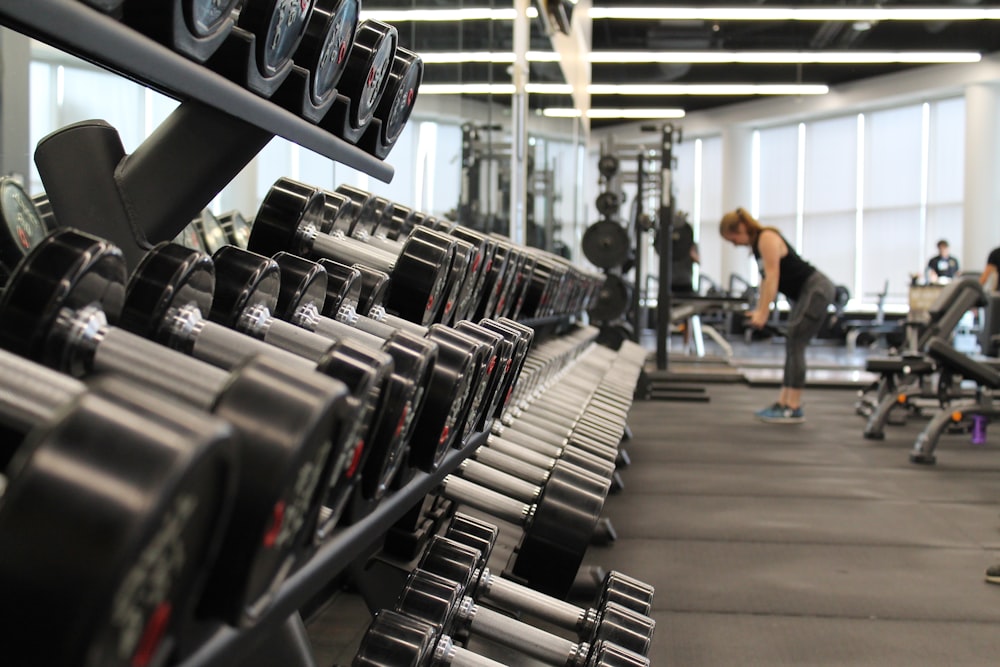
Walking into a weight room for the first time can feel like stepping onto another planet. If you feel a wave of anxiety when you see the rows of iron and specialized machines, you are experiencing gymtimidation. It is a completely normal reaction for any novice, but you must remember that everyone in that room started exactly where you are today. The experts are focused on their own reflection and their mind-muscle connection, not on what weight is on your bar.
One of the biggest hurdles for people starting a beginner weight lifting for fat loss and muscle toning guide is the fear of becoming bulky. Let me clear that up right now: muscle is your inner armor. It provides structural support for your joints and builds a dense, athletic body composition rather than a puffy one. Instead of obsessing over the number on the scale, focus on how your clothes fit and how much stronger you feel. Research shows that while inactive adults typically lose 3% to 8% of their muscle mass every decade, participating in 10 weeks of resistance training can increase lean muscle weight by 1.4 kg and boost resting metabolic rate by 7%. This metabolic shift allows your body to burn more fuel even when you are sitting on the couch.

Safety First: Proper Form and Biomechanical Cues
Before you touch a single dumbbell, we need to talk about the non-negotiables of proper weight lifting form. The most common weight lifting form mistakes for beginners to avoid involve rushing the movement and using momentum instead of muscle. You should treat every rep like a skill you are trying to master.
First, always start with a dynamic warm-up. This includes movements like arm circles, leg swings, and bodyweight squats to increase your core temperature and lubricate your joints. When you begin your sets, focus on your breathing. The gold rule is to exhale during the exertion or concentric phase—that is the part where you are pushing or pulling the weight against gravity. Never lock your knees or elbows at the top of a movement; keeping a slight bend ensures the tension stays on the muscle and off the bone.
To select the right load, use the 2-3 Rep Rule. If you can perform your set and feel like you could have done 2 or 3 more reps with perfect technique, the weight is correct. If you are struggling to maintain your range of motion or your form breaks down before the end of the set, the weight is too heavy. Using this method allows you to safely increase weight in strength training for novices without risking injury.
The Beginner Routine: 6 Foundational Movement Patterns
Stop looking for the most complicated isolation exercises. For your first year, you should live and breathe the best compound exercises for a first time strength training program. These moves involve multiple joints and muscle groups, giving you the biggest bang for your buck and building real-world strength. Every effective beginner weight lifting routine is built around these six patterns:
- The Squat (Knee Dominant): Targets your quads, glutes, and core. Think of it as sitting back into an invisible chair.
- The Hinge (Hip Dominant): This is your deadlift pattern. You are pushing your hips back like you are trying to close a car door with your glutes while keeping your spine neutral.
- The Push: This can be horizontal (bench press) or vertical (overhead press). It hits your chest, shoulders, and triceps.
- The Pull: Focus on rows and pull-downs. This builds the back and improves posture.
- The Carry: Picking up heavy weights and walking with them. This is the ultimate test of core stability and grip strength.
- The Core: Movements like planks or dead bugs that teach you to stabilize your spine.
The Bench (Push)
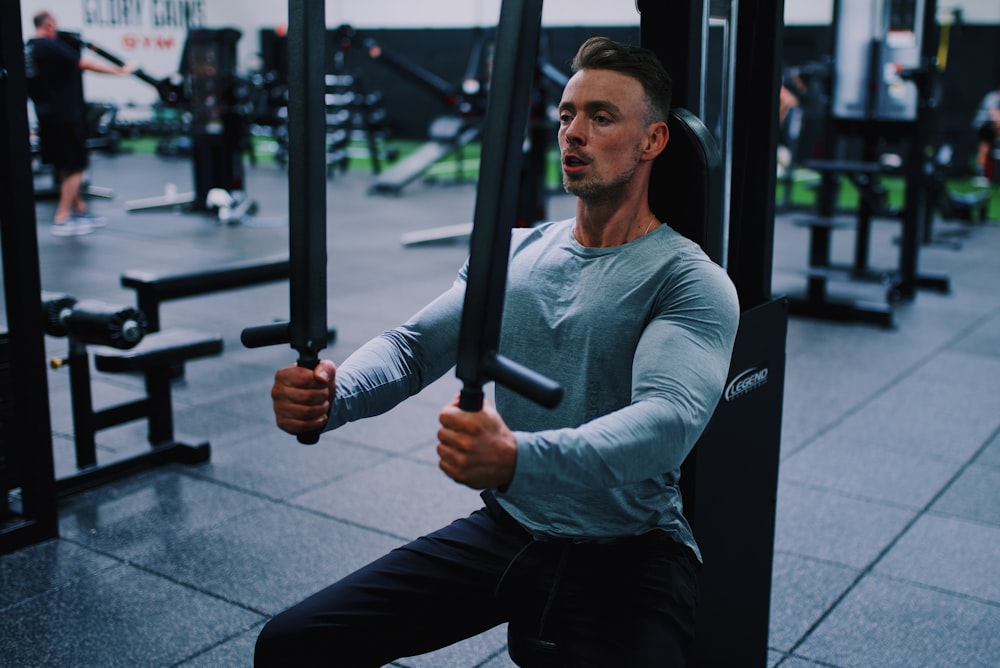
The bench press is the king of upper-body pushing movements. It develops the pectorals and the front of the shoulders. As a beginner, focus on keeping your feet planted firmly on the floor and squeezing your shoulder blades together against the bench to create a stable base.
The Row (Pull)
A bent-over row or a seated cable row is essential for a balanced physique. Most people have rounded shoulders from sitting at desks; pulling movements correct this. Focus on leading with your elbows and squeezing your shoulder blades together at the peak of the movement.

](https://img.clinicnex.com/publisher/imagehub/0249d9c4c3fa.jpg)
The 12-Week Roadmap: Phased Progression
You cannot just wing it in the gym. To see results, you need a plan that utilizes progressive resistance. This means gradually increasing the difficulty of your workouts so your body is forced to adapt. Research suggests that performing 30 to 60 minutes of strength training per week is associated with a 10% to 20% lower risk of death from all causes, including heart disease and cancer. To get there, follow this roadmap.
| Phase | Duration | Primary Focus | Training Volume |
|---|---|---|---|
| Phase 1: Foundation | Weeks 1-4 | Technical mastery & coordination | 2 sets of 12-15 reps (Light) |
| Phase 2: Strength | Weeks 5-8 | Increasing intensity & weight | 3 sets of 8-10 reps (Moderate) |
| Phase 3: Hypertrophy | Weeks 9-12 | Muscle growth & performance | 3-4 sets of 6-12 reps (Challenging) |
During Week 8, I recommend a mandatory deload. This means you still go to the gym, but you reduce your weights by 50%. This gives your central nervous system a break and prevents burnout. Once you hit Phase 3, you can start adding more training volume and experimenting with how many days a week should a beginner lift weights for results, though three days remains the sweet spot for most.
Recovery and Post-Workout Nutrition
Lifting weights creates tiny micro-tears in your muscle fibers. You do not get stronger in the gym; you get stronger while you sleep and eat. This is why recovery is just as important as the workout itself.
Expect to feel Delayed Onset Muscle Soreness (DOMS) about 24 to 48 hours after your first few sessions. This is a sign that your body is repairing itself. To speed up this process, focus on your post-workout nutrition. Aim to eat a meal rich in protein and carbohydrates, such as chicken with rice or eggs on toast, within about an hour of finishing your session. This helps rebuild glycogen stores and provides the amino acids needed for muscle repair.
Beyond food, prioritize sleep and active recovery. On your off days, go for a walk or perform some light stretching. This keeps the blood flowing to your muscles without adding extra stress. Remember, strength training benefits for beginners go far beyond the physical; it is a long-term investment in your longevity and metabolic health.
FAQ
How many days a week should a beginner lift weights?
A beginner should aim for three non-consecutive days per week, such as Monday, Wednesday, and Friday. This frequency provides enough stimulus to trigger muscle growth and fat loss while allowing 48 hours between sessions for the muscles to recover and repair.
How much weight should I start lifting as a beginner?
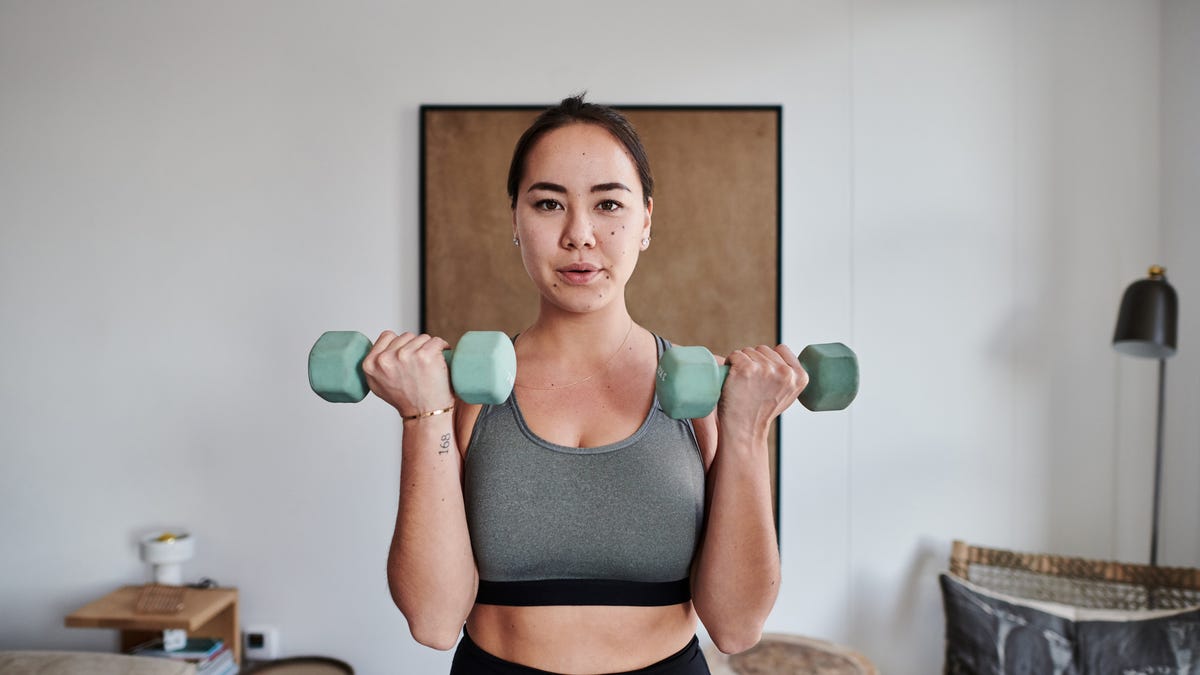
Most beginners should start with a weight between 5kg and 10kg (11-22 lbs) for upper body movements and slightly more for lower body movements. The goal is to find a weight where you can complete 12 to 15 reps with perfect form, leaving about two reps in the tank.
Can I start weight lifting at home without a gym?
Yes, you can absolutely start at home using your body weight or a simple pair of adjustable dumbbells. Exercises like air squats, push-ups, and lunges are highly effective for building a strength foundation before you ever step foot into a commercial gym environment.
How soon will I see results from weight lifting?
You will typically start to feel stronger and notice improved energy levels within the first week. Noticeable physical changes in muscle tone and body composition usually become visible after about three weeks of consistent training and proper nutrition.
What is the best weight lifting routine for a beginner?
The best routine for a novice is a full-body program performed three times a week. This routine should focus on compound movements—squats, hinges, pushes, and pulls—to ensure you are training all major muscle groups efficiently in every session.