
Quick Facts
- Market Leader: Hydrolyzed collagen is projected to lead the market by product type in 2026, accounting for approximately 63.7% of the total share as consumers prioritize high-bioavailability formulations.
- Format Preference: Powder-based formats are expected to remain the primary method of consumption for collagen supplements in 2026, representing roughly 58.4% of global market sales.
- Bioavailability Benchmark: To ensure maximum solubility and biological activity, look for a low molecular weight, ideally under 500 Daltons.
- Fortification Trend: In the United States, over 50% of collagen supplement products are expected to include fortified nutrients such as vitamin C, biotin, and zinc.
- Skin Health Winner: Marine collagen is technically superior for dermal hydration due to its high concentration of Type 1 collagen.
- Dosage Requirement: For visible results in connective tissue support and skin barrier function, a daily dose of 5,000mg to 15,000mg is recommended.
Choosing between collagen powder and capsules depends on bioavailability and dosage requirements. Hydrolyzed collagen powders generally offer higher concentrations per serving and faster absorption rates because the peptides are pre-broken down. While capsules provide convenience and portability, they often require multiple servings to match the potent 5,000mg to 15,000mg doses found in top-rated powders and liquids.
Our Top Picks
Finding the best collagen supplements requires looking past the marketing and into the science of bioactive peptides. In 2026, the industry has matured, offering more transparent sourcing and better enzymatic hydrolysis processes.
- Best for Skin Elasticity: Wild-caught marine collagen paired with hyaluronic acid and vitamin C for optimal skin barrier function.
- Best for Active Lifestyles: Grass-fed bovine collagen which provides a broader amino acid profile for bone density and connective tissue support.
- Best for Travel: Best liquid collagen shots for travel and convenience that offer pre-measured 10,000mg doses without the need for mixing.
- Best Value: Unflavoured hydrolyzed collagen powder in bulk sizes, providing the lowest price per gram of protein.
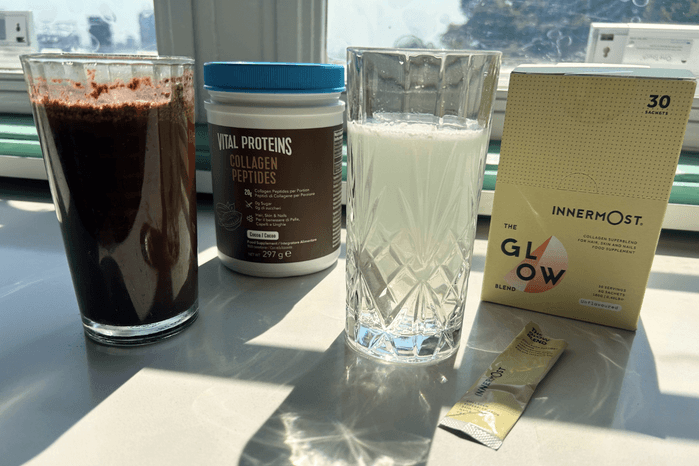
Collagen Powder vs Capsules: The Dosage Math
One of the most frequent questions I receive as an editor is whether a few capsules can truly replace a scoop of powder. The answer lies in simple mathematics. A standard collagen capsule typically holds about 500mg to 750mg of collagen. To reach the clinically studied daily dose of 10,000mg found in the best collagen supplements, you would need to swallow between 14 and 20 large capsules every single day.
This is why powder-based formats are expected to remain the primary method of consumption for collagen supplements in 2026, representing roughly 58.4% of global market sales. Powders allow for a much higher concentration of bioactive peptides in a single serving. However, the choice is not just about quantity; it is about the experience. If you find the taste of bovine collagen off-putting, or if you are constantly on the move, you might prefer the best liquid collagen shots for travel and convenience. These liquids are pre-solubilized, meaning the body does not have to work as hard to break down the delivery mechanism.
| Feature | Collagen Powder | Collagen Capsules | Liquid Collagen Shots |
|---|---|---|---|
| Average Dosage | 10,000mg - 20,000mg | 500mg - 3,000mg | 5,000mg - 10,000mg |
| Bioavailability | High (if hydrolyzed) | Moderate (slower digestion) | Highest (pre-solubilized) |
| Convenience | Moderate (requires mixing) | High (portable) | High (grab-and-go) |
| Cost per Serving | Lowest | High | Highest |
| Best For | Daily routine at home | Travel or low-dose maintenance | Maximum convenience |
When considering hydrolyzed collagen powder vs capsules for absorption, the powder almost always wins. Because the powder is already loose, it interacts with stomach acid immediately, whereas a capsule shell must be dissolved first. For those seeking efficiency, the best marine collagen for skin elasticity 2026 formulations are almost exclusively found in powder or liquid form.
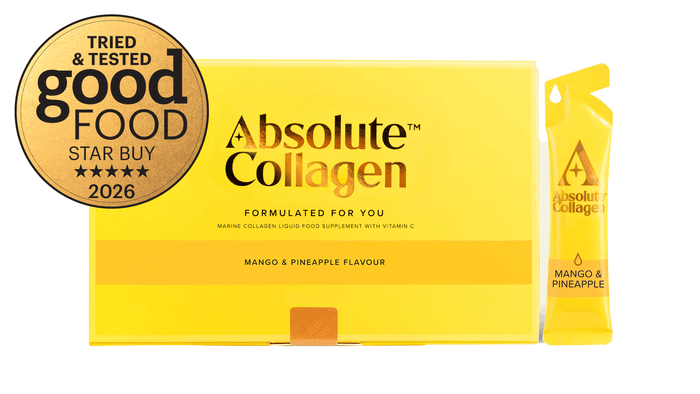
The Science of Bioavailability: Daltons and Hydrolysis
To understand why some products work while others fail, we have to look at molecular weight. Raw collagen is a giant molecule that the human body cannot easily absorb through the gut wall. To make it useful, manufacturers use enzymatic hydrolysis to break these long chains into smaller bioactive peptides.
In 2026, the gold standard for quality is a molecular weight under 500 Daltons. The smaller the Dalton size, the easier it is for the peptides to pass through the intestinal lining and enter the bloodstream. This is where marine collagen benefits really shine. Naturally, fish collagen has a smaller particle size than bovine or porcine sources, which enhances its absorption rate.
Type 1 marine collagen benefits for hair and nails are particularly notable. Since Type 1 collagen makes up about 70-80% of our skin, supplements derived from wild-caught fish are highly targeted toward dermal hydration and improving the skin barrier function.
Expert Tip: Always look for the term "hydrolyzed" on the label. This ensures the protein has undergone the enzymatic hydrolysis process necessary to turn it into absorbable bioactive peptides.
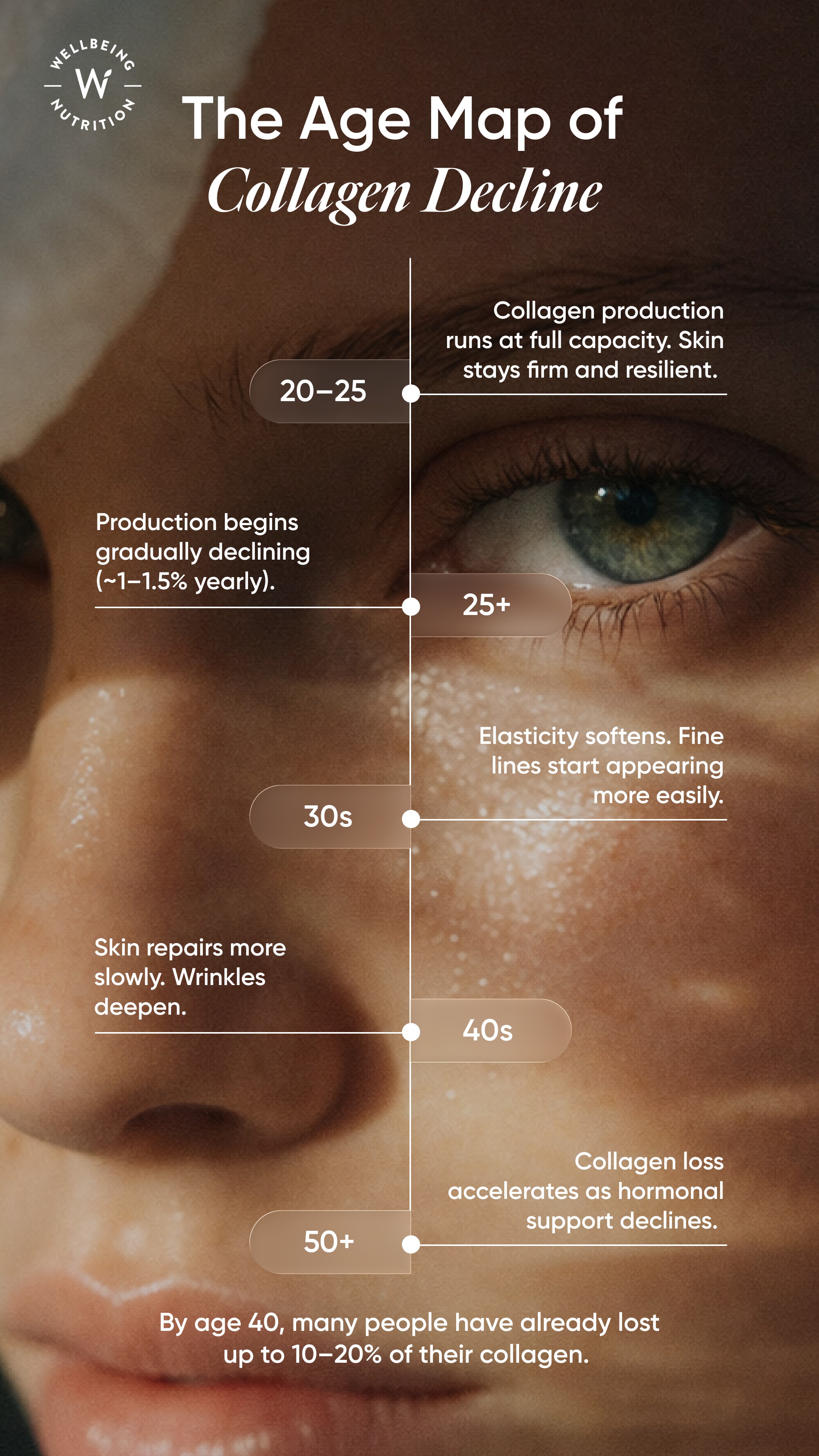
Targeted Solutions: Menopause and Skin Elasticity
For many of my readers, collagen is not just a beauty supplement; it is a vital part of healthy aging. During the first five years of menopause, women can lose up to 30% of their skin's collagen. This leads to a noticeable decrease in collagen for skin elasticity, resulting in fine lines and wrinkles.
Finding the right daily collagen dosage for menopause symptoms is crucial. Clinical trials often suggest that a higher dose, around 10 grams to 15 grams of hydrolyzed peptides, is necessary to stimulate the fibroblasts—the cells responsible for producing new collagen in the dermis. When collagen for skin elasticity is the primary goal, I recommend a formula that includes synergistic ingredients. In the United States, over 50% of collagen supplement products are now expected to include vitamin C. Vitamin C is the essential co-factor for collagen synthesis; without it, your body cannot effectively turn those amino acids into new connective tissue support.
Using the best marine collagen for skin elasticity 2026 can help restore that lost dermal hydration. These marine sources are rich in glycine and proline, the specific amino acids that keep the skin looking plump and resilient.
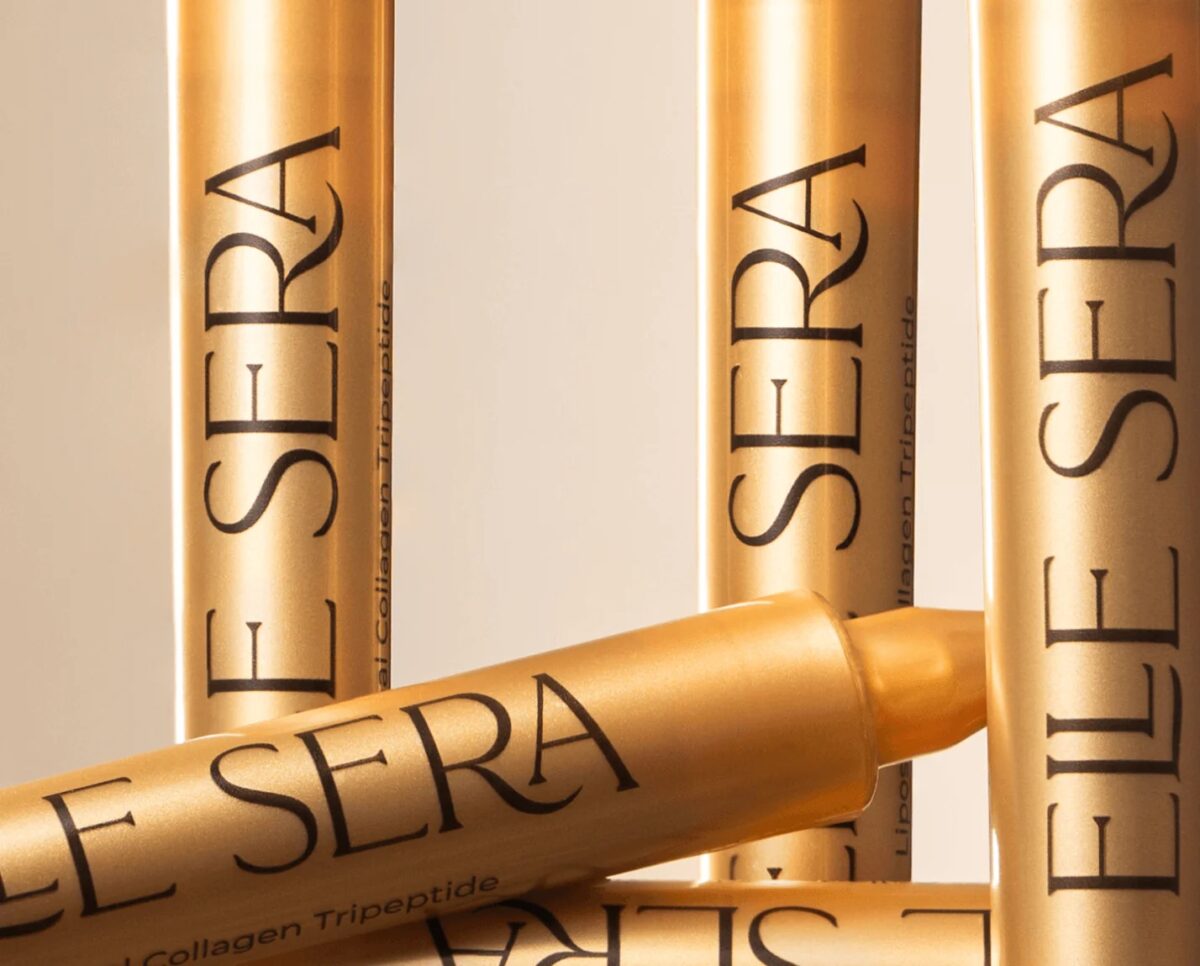
Versatility in 2026: Mixability and Sensory Profiles
A supplement only works if you actually take it. In the past, collagen powders were notorious for having a "bovine" aftertaste or clumping at the bottom of a glass. By 2026, advanced filtration and drying techniques have largely solved these issues.
The best unflavoured collagen powder for coffee should be virtually invisible. It should dissolve instantly in hot liquids without changing the sensory profile of your morning brew. For those who prefer cold drinks, look for "agglomerated" powders, which have been processed to ensure better solubility in water.
- Grass-fed bovine: Generally offers a more neutral taste than grain-fed alternatives and supports broader bone density goals.
- Wild-caught fish: Higher quality marine sources are now filtered to remove any "fishy" scent, making them perfect for light smoothies.
- Clean Label: Look for products that are free from artificial sweeteners like sucralose, opting instead for stevia or remaining completely unflavoured.
The shift toward hydrolyzed collagen is projected to lead the market, accounting for 63.7% of the total share by 2026. This is largely because hydrolyzed peptides are the easiest to incorporate into a variety of foods and drinks without ruining the texture.
FAQ
What are the benefits of taking collagen supplements?
Collagen supplements provide the essential amino acids needed to maintain the structural integrity of the body. Regular intake can improve skin elasticity, reduce the appearance of fine lines and wrinkles, and support joint mobility. By providing bioactive peptides, these supplements encourage the body's natural production of collagen, which typically declines with age.
Do collagen supplements actually work for skin and hair?
Yes, scientific evidence supports the efficacy of hydrolyzed collagen for improving skin hydration and density. Studies have shown that specific peptides can reach the deeper layers of the skin, where they stimulate fibroblasts. For hair, the amino acids in collagen, particularly proline, help build keratin, which is the primary protein found in hair and nails.
Is it better to take collagen powder or pills?
For most people, collagen powder is superior because it allows for a much higher dosage. Most clinical studies use 5g to 10g of collagen daily, which would require taking 10 to 20 capsules. Powder also offers faster absorption because the body does not need to break down a capsule shell. Pills are only recommended for those who need a very small maintenance dose or who cannot tolerate the texture of powders.
How long does it take to see results from collagen?
Patience is key when starting a collagen regimen. While some people notice improvements in skin hydration within 4 weeks, the most significant results for skin elasticity and joint comfort usually appear after 8 to 12 weeks of consistent daily use. Hair and nail improvements may take up to 6 months to become fully visible due to the slow growth cycle of these tissues.
Which collagen is best for joints and bones?
Bovine collagen is typically the best choice for joint and bone health because it contains a mix of Type 1 and Type 3 collagen. These types are found heavily in our bones, tendons, and cartilage. Look for products sourced from grass-fed bovine to ensure a clean nutrient profile.
Is marine collagen better than bovine collagen?
Marine collagen is not necessarily "better" but it is more specialized. It is superior for skin health because it consists mostly of Type 1 collagen and has a smaller molecular weight, making it highly bioavailable. Bovine collagen is a more versatile all-rounder that supports the entire body's connective tissue support and bone density.
Final Verdict for 2026
As we navigate the wide array of options in 2026, the key to success remains the same: consistency and quality. Whether you choose the best marine collagen for skin elasticity 2026 or a robust bovine powder for joint health, ensure you are hitting that 10-gram daily threshold. Always prioritize products that undergo third-party lab testing for heavy metals and purity. By choosing a hydrolyzed formula with a low molecular weight and pairing it with a diet rich in vitamin C, you are giving your body the best tools to maintain its structural health for years to come.