Quick Facts
- Replacement Ratio: A single pair is designed to replace 10 to 15 pairs of traditional fixed-weight dumbbells, reclaiming up to 90% of your floor space.
- Investment Floor: Quality sets typically start at a $300 price point; professional-grade equipment can exceed $800.
- Market Trend: The home-use segment is the primary driver of the market, holding an estimated 62.4% of the total market share as of 2025.
- Performance Ceiling: Standard units usually top out at 50-55 lbs, but high-performance models can reach up to 90 pounds.
- Progression Standard: To ensure consistent gains, look for sets offering 2.5lb or 5lb increments for progressive overload.
- Safety Priority: Only choose models with a proven selectorized system and mechanical locking locks to ensure safety during overhead movements.
Buying adjustable dumbbells is one of the smartest investments for a minimalist home gym, but not all sets are created equal. You need to look beyond the price tag. When buying adjustable dumbbells, prioritize the total weight range and increment sizes to ensure long-term strength progression. Essential features include the mechanism—dials, pins, or twist handles—and the durability of materials like cast iron plates.
Factor 1: Maximum Weight Capacity and Range
When you are first starting out, a pair of 50-pound dumbbells might seem like more than enough. However, as an editor focused on athletic performance, I have seen countless lifters hit a plateau within six months because they underestimated their potential for hypertrophy training. The weight capacity for muscle growth isn't just about what you can lift today; it is about what you will need for a heavy chest press or a goblet squat a year from now.
Most consumer-grade adjustable dumbbells feature a range that peaks around 50 or 55 pounds. While this is sufficient for isolation movements, it often falls short for compound exercises. If your goals include serious strength gains, look for heavy-duty models that offer expansion kits or standard builds reaching 80 to 90 pounds. Choosing the best weight range for adjustable dumbbells for muscle building requires an honest assessment of your current strength vs. your 24-month goals.
Pro Tip: If you are a beginner, 50 lbs is a solid baseline. If you have any previous lifting experience, look for sets with higher ceilings or those that use cast iron plates which are traditionally more durable under heavy loads.
Factor 2: Precision of Weight Increments
The secret to long-term success in the gym is progressive overload. This means adding small, manageable amounts of weight to your lifts over time. If a dumbbell set only allows for 10-pound jumps, you are going to struggle. Imagine trying to increase your lateral raise—a small-muscle isolation movement—by 10 pounds at once. It is nearly impossible without compromising form.
Effective adjustable dumbbell weight increments should be as small as possible. The gold standard is 2.5lb increments, especially in the lower weight ranges. This allows for fine-tuning weight steps so you can keep moving forward without hitting a wall. When adjustable dumbbell weight increments for strength progression are too large, you risk injury or stagnation. Ensure the set you choose offers granular control between 5 lbs and 25 lbs.
Factor 3: Adjustment Mechanism Efficiency
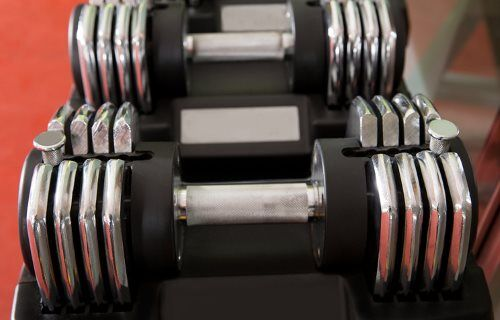
Efficiency in the gym leads to better results. If you are performing supersets or high-intensity interval training, you cannot afford to spend two minutes fiddling with your gear between exercises. This is where comparing dial vs pin adjustable dumbbell mechanisms becomes essential.
| Mechanism | Adjustment Speed | Mechanical Complexity | Best Used For |
|---|---|---|---|
| Dial-a-Weight | Very Fast | High (Internal Gears) | Fast-paced supersets |
| Pin-Lock | Medium | Low (Manual Pin) | Heavy, traditional lifting |
| Twist-Handle | Fastest | High (Internal) | Minimalist home gym setups |
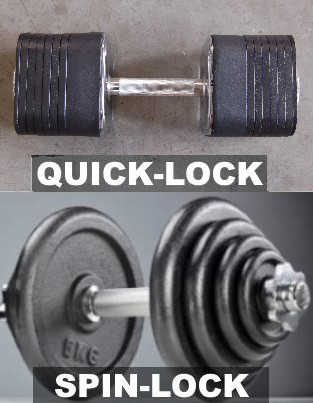
| Spin-Lock | Slow | Very Low | Budget-conscious lifters |
A selectorized system is generally preferred for modern home gyms because it allows for near-instant transitions. However, speed should never come at the cost of mechanical reliability.
Factor 4: Build Quality and Material Durability
In my years of reviewing equipment, I’ve found that the "budget" option often ends up being the most expensive because you have to buy it twice. When buying adjustable dumbbells, look closely at the materials used in the adjustment cradle and the plates themselves. Plastic-coated plates are quieter and gentler on floors, but they can crack if dropped.
Durable adjustable dumbbells with high quality materials often utilize cast iron plates or steel components. Look for a high drop-test rating if you plan on pushing yourself to failure. While you should never intentionally drop adjustable weights (it can misalign the selectorized system), accidents happen. A set built with heavy-duty construction will survive a small tumble; a cheap plastic set likely won't.
Factor 5: Handle Ergonomics and Grip
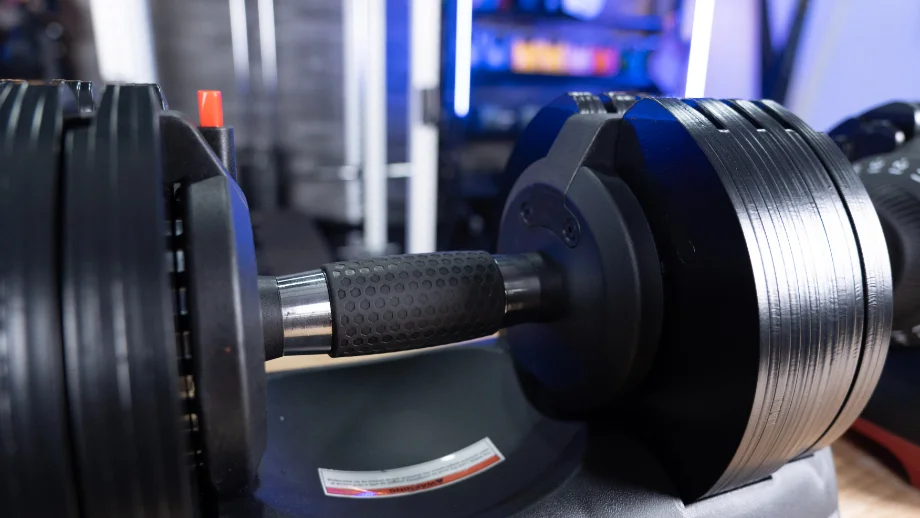
The handle is your only point of contact with the weight. If the grip is uncomfortable, your workout will suffer. I recommend looking for a handle diameter of approximately 35mm, which provides a substantial feel for most hand sizes.
More importantly, check for a knurled handle. Knurling—the cross-hatch pattern etched into the metal—provides a secure grip even when your hands are sweaty. Avoid smooth plastic handles, as they become slippery and dangerous during high-intensity sessions. Evaluating handle grip and ergonomics for adjustable weights is a safety step that many buyers overlook until they are halfway through a heavy set of overhead presses.
Factor 6: Physical Dimensions and Length
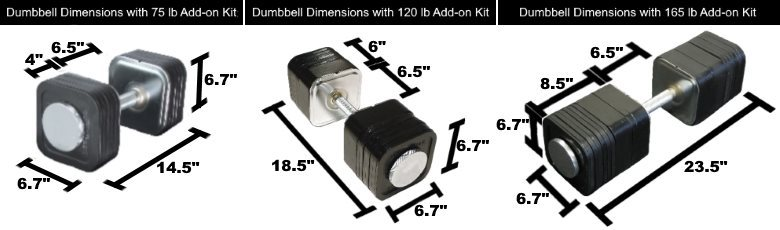
One of the biggest complaints with certain brands is the "static length" issue. Some dumbbells use a full-length bar that stays the same size whether you are lifting 5 pounds or 50 pounds. This creates a bulky equipment footprint that can interfere with your range of motion.
For example, if the dumbbell is 16 inches long at all times, it may clank together during chest presses or restrict your movement during bicep curls. Choosing adjustable dumbbells for limited home gym space should involve checking if the length of the dumbbell shortens as you decrease the weight. A compact design vs. usability is a trade-off you must balance, especially in a garage gym setup where every inch of movement counts.
Factor 7: Safety Mechanisms and Locking Reliability
Safety is non-negotiable. When you have 50 pounds of iron hovering over your face during a bench press, you need to know those plates are locked tight. Recent history has shown the importance of this; for instance, the 2025 BowFlex recall highlighted how even major brands must be scrutinized for locking pin reliability.
Before finalizing your purchase, research the specific safety locks used. Does the unit have a secondary locking pin? Can the weight be changed while the handle is out of the cradle? A high-quality selectorized system will have "fail-safes" that prevent the plates from detaching mid-exercise. Always perform a "shake test" at low weight levels when you first receive your gear to ensure the internal locking mechanism is functioning perfectly.
Factor 8: Storage and Footprint
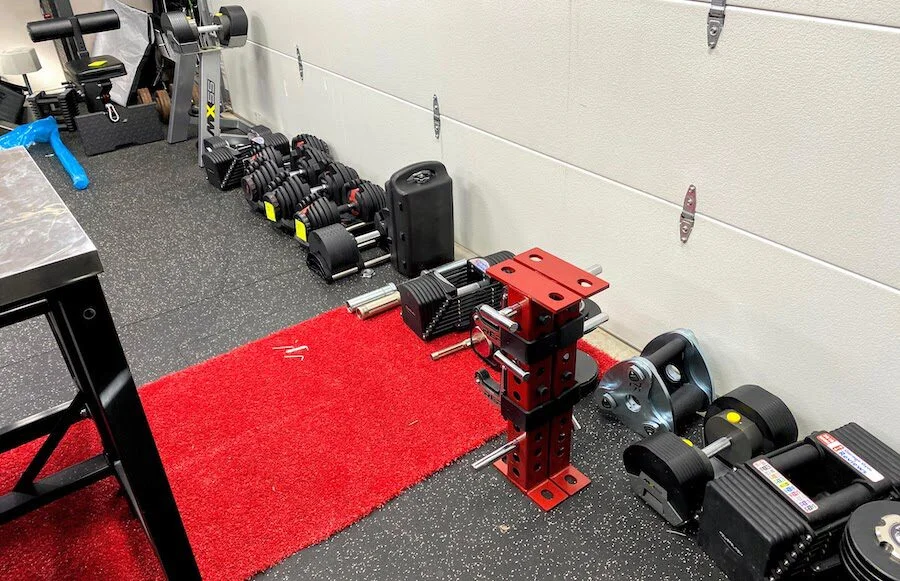
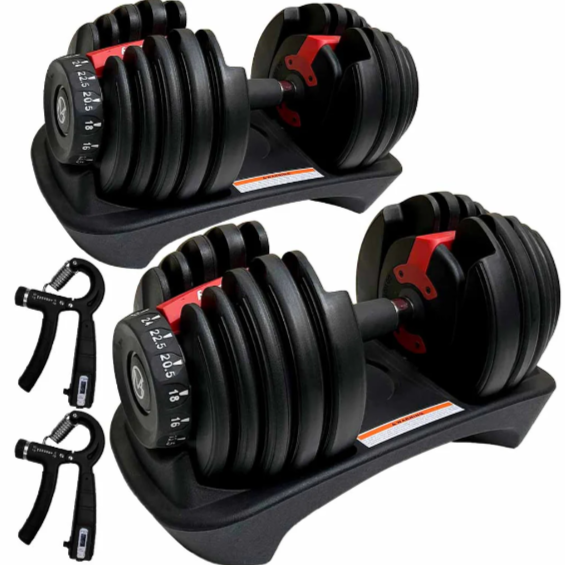
The primary appeal of these weights is that they are space-saving dumbbells for home gym use. Instead of a massive rack spanning six feet of wall space, you have two units that sit neatly in a corner. However, you still need a dedicated spot for them.
Most sets come with a cradle storage system. This tray isn't just for organization; it is usually required for the adjustment mechanism to function. For those with a dedicated garage gym setup, I highly recommend investing in a stand. Lifting heavy dumbbells off the floor can put unnecessary strain on your lower back. A stand keeps the weights at waist height, maintaining a compact footprint while improving the ergonomics of your workout space.
Factor 9: Scalability and Future-Proofing
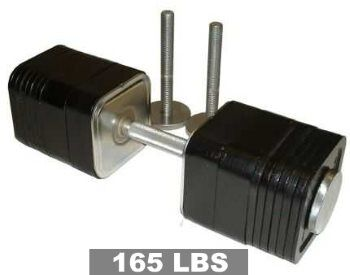
Your fitness journey is an evolution. The weight that feels heavy today will eventually become your warm-up. This is why I always look for scalability. Some premium brands offer expansion kits that allow you to turn a 50-pound set into a 70 or 90-pound set later on.
Buying adjustable dumbbells that can grow with you is a form of insurance for your wallet. Instead of buying an entirely new set when you get stronger, you simply add more plates. Additionally, check the warranty. A company that offers a 2-year or 5-year warranty on the internal mechanism is a company that trusts its build quality.
FAQ
Are adjustable dumbbells worth the investment?
Yes, they are exceptionally cost-effective. While the upfront cost of $300 to $800 might seem high, a full set of individual dumbbells to cover the same range would cost thousands of dollars and require a massive storage rack. They provide a professional-grade workout experience in a fraction of the space.
What should I look for when buying adjustable dumbbells?
Prioritize the weight range, the increment size (look for 2.5lb steps), and the durability of the locking mechanism. Ensure the handle has a good knurled grip and that the physical length of the dumbbell doesn't hinder your range of motion.
How heavy should my adjustable dumbbells be?
For most fitness enthusiasts, a set that goes up to 50 or 55 pounds is sufficient for general health and muscle tone. However, if you are focused on heavy strength training or powerlifting movements, you should look for models that reach 80 to 90 pounds.
Are adjustable dumbbells better than a full set of fixed weights?
They are better for home gyms where space is a constraint. While fixed weights are more durable and can be dropped, adjustable dumbbells offer the same muscle-building benefits while replacing 10 to 15 pairs of weights, making them the superior choice for home or garage gym environments.
Do adjustable dumbbells break easily?
High-quality sets are very durable, but they are more complex than solid iron weights. If you treat them with care and avoid dropping them from significant heights, a quality set with cast iron plates can last a decade or more. The most common failures occur in budget sets with heavy plastic components in the locking mechanism.