Quick Facts
- Most Popular Style: Receiver-in-Canal (RIC), accounting for 62.5% of the market.
- Best for Severe Loss: Behind-the-Ear (BTE) with Ultra Power capabilities.
- Top Tech 2026: AI-driven automatic sound adjustment and integrated health sensors.
- Price Range: $800 to $4,500+ per device depending on the technology tier.
- Trial Period: Standard 30–100 days depending on the manufacturer and clinic.
- Key Feature: IP68-rated water resistance for active users and outdoor durability.
Choosing between modern hearing aid types doesn't have to be overwhelming. In 2026, hearing aid styles comparison focus on AI integration and discreet designs. Whether you're looking for behind-the-ear vs in-the-ear models, choosing a hearing aid for your lifestyle requires understanding how technology matches your hearing loss. This guide breaks down the most popular styles, from RIC to CIC, helping you find the perfect wearable for clarity and comfort.
Before You Buy: Is It Hearing Loss or a Medical Issue?
Before you invest in any wearable technology, we must differentiate between a permanent decline in hearing and a temporary medical obstruction. As a longevity editor, I often see men overlook simple fixes. If you experience a sudden "crackling" sound or a sensation of fullness, you might be dealing with earwax impaction or Eustachian tube dysfunction rather than sensorineural loss.
A professional audiological evaluation is the non-negotiable first step. Research indicates that hearing aid adoption rates correlate with the degree of hearing impairment, with uptake increasing from 18 percent for mild hearing loss to 66 percent for severe cases. However, many people wait nearly seven years after noticing a decline before seeking help. During that time, the brain's auditory processing centers can begin to atrophy. Early intervention is a pillar of cognitive longevity.
If you also struggle with a constant ringing, look for devices that include tinnitus masking features. Modern signal processing can neutralize that internal noise while simultaneously amplifying the external sounds you actually want to hear.

Decoding Hearing Aid Types: BTE vs. ITE Styles
When you look at the market today, the choices are broadly split between devices that sit outside the ear and those that sit inside it. Currently, approximately 80 percent of hearing aid wearers choose a style that sits behind the ear, reflecting a shift toward versatility and high-output performance.
The Dominant Players: RIC and BTE
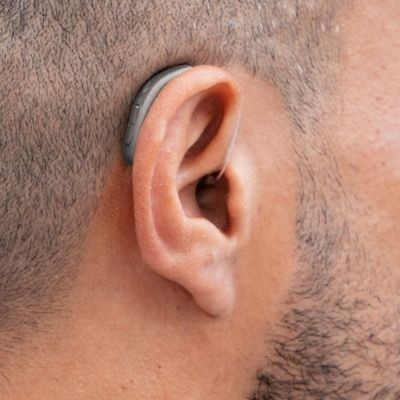
The receiver-in-the-ear (RIE) segment is estimated to hold a 62.56 percent revenue share of the global hearing aid market as of 2025. In this design, the main body sits behind the ear, but the speaker (receiver) sits directly inside the ear canal. This separation allows the device to be remarkably small while maintaining high-fidelity sound.
| Feature | Behind-the-Ear (BTE/RIC) | In-the-Ear (ITE/ITC) |
|---|---|---|
| Best For | All levels of hearing loss | Mild to moderate loss |
| Battery | Larger, often rechargeable | Smaller, often disposable |
| Connectivity | Excellent Bluetooth/Streaming | Can be limited by size |
| Dexterity | Easier to handle | Requires fine motor skills |
| Durability | High (IP68 common) | Moderate (Wax exposure) |
Behind-the-ear vs receiver-in-canal hearing aids are often compared by users who prioritize battery life. Standard BTE models are the workhorses of the industry, capable of housing the massive power needed for profound hearing loss. However, if you have longer hair, be aware of "hair noise"—the sound of strands rubbing against the external microphones. This is a common note from my testers who prefer the RIC style for its sleeker profile and reduced wind interference.
The Discreet Alternative: ITE and ITC
If you prioritize a "non-traditional" appearance, discreet in-the-canal hearing aids for mild hearing loss are your best bet. These custom-molded devices fit entirely within the ear bowl (ITE) or the canal itself (ITC/CIC).
The primary advantage here is natural resonance. Because the microphone sits within the ear, it utilizes the ear’s natural shape to collect sound, which can help with localizing where a noise is coming from. The trade-off is the "occlusion effect," which can make your own voice sound hollow or boomy, like talking inside a barrel.
Tester Note: If you have issues with moisture or frequent ear infections, avoid ITE styles. The electronics are more exposed to the humidity and wax of the ear canal compared to BTE models.
The 3-Step Selection Matrix: Which One Fits You?
Selecting among the various hearing aid types isn't just about aesthetics; it’s about mapping the hardware to your biology and daily habits.
Step 1: Map Your Clinical Loss
Your audiogram is the blueprint. Hearing loss is measured in decibels (dB), and different styles have different "ceilings" for how much power they can provide.
- Mild Loss (26-40 dB): Almost any style works. Many first-time users opt for discreet in-the-canal hearing aids for mild hearing loss to ease the transition.
- Moderate Loss (41-60 dB): RIC and ITC styles are highly effective here, balancing size and power.
- Severe to Profound (61-80+ dB): BTE models are generally required to provide the high-gain amplification necessary without causing feedback.
Step 2: Evaluate Physical Dexterity
This is a critical consideration for hearing aid options for seniors with dexterity challenges. If you have arthritis or reduced feeling in your fingertips, the tiny "Size 10" batteries used in Completely-in-Canal (CIC) models can be a nightmare to change. In these cases, a BTE or RIC model with a magnetic charging cradle is vastly superior.
Step 3: Audit Your Lifestyle
Choosing a hearing aid for your lifestyle means looking at your environment. If you are a marathon runner or spend weekends hiking, you need hearing aid styles for active lifestyles that offer IP68 ingress protection against sweat and rain. If you spend your days in boardrooms or crowded restaurants, your focus should be on digital signal processing and binaural streaming, which allows two hearing aids to work together to isolate a single voice in a room of fifty.
2026 Technology Tiers: AI, Connectivity, and Cost
The industry has moved beyond simple amplification. We are now in the era of "hearables"—sophisticated computers for your ears.
AI and Speech Clarity
The standout feature for 2026 is the use of artificial intelligence hearing aids for speech clarity. Companies like Phonak and Starkey now use deep neural networks to "clean" the audio signal in real-time. Instead of just turning the volume up on everything, the AI identifies speech patterns and suppresses background noise like clinking silverware or road hum.
Connectivity and Apps
Most modern hearing aid types now feature universal Bluetooth connectivity. This isn't just for phone calls; it’s for smartphone app integration. These apps allow you to "geo-tag" your favorite locations. For example, your hearing aid can automatically switch to a "Restaurant Mode" with focused directional microphones the moment you walk into your favorite bistro.
Pricing Tiers for 2026
- Basic ($800 - $1,500): Often found in over-the-counter models. Best for quiet environments and one-on-one conversations. Limited noise reduction.
- Mid-Range ($1,500 - $3,000): Includes automatic sound adjustment and basic Bluetooth streaming. Good for social settings and office work.
- Premium ($3,000 - $4,500+): The best hearing aid types for noisy environments 2026 fall into this category. Feature-rich with AI processing, fall detection, 4D sensors, and premium water resistance.
FAQ
What are the main types of hearing aids?
The primary types are Behind-the-Ear (BTE), Receiver-in-Canal (RIC), and In-the-Ear (ITE). Within the ITE category, there are even smaller sub-types like In-the-Canal (ITC), Completely-in-Canal (CIC), and Invisible-in-the-Canal (IIC). Each varies in power output, battery life, and how much they are visible to others.
Which hearing aid style is best for severe hearing loss?
Behind-the-Ear (BTE) models are typically the best choice for severe to profound hearing loss. Their larger size allows for a more powerful amplifier and a larger battery, which are necessary to provide the high levels of gain required without causing whistling or feedback.
What is the difference between BTE and RIC hearing aids?
In a traditional BTE, all components sit in a housing behind the ear, and sound travels through a tube into the ear. In a RIC model, the speaker (receiver) is removed from the housing and placed inside the ear canal at the end of a thin wire. This makes the RIC smaller, more discreet, and often provides a more natural sound quality.
Are in-the-canal hearing aids noticeable?
Most modern In-the-Canal (ITC) and Completely-in-Canal (CIC) models are very difficult to see. Because they sit deep within the ear or are custom-molded to the ear's anatomy, they are often virtually invisible from the side. However, their small size may limit the features they can hold compared to larger styles.
How do I choose the right hearing aid style for my needs?
You should base your choice on three factors: the severity of your hearing loss as shown on an audiogram, your lifestyle needs (such as noisy environments or sports), and your physical ability to handle small devices. Consulting with an audiologist to try different styles during a trial period is the most effective way to ensure a good fit.
Taking the Next Step
Investing in your hearing is an investment in your brain health and overall longevity. Modern hearing aids are designed to help you stay engaged with the world, preventing the social isolation that often accompanies hearing loss.
If you're ready to move forward, book a professional fitting. Most reputable clinics and brands offer a 45-to-100-day trial period. Use this time to test the device in your most challenging environments—the loud Sunday brunch, the windy golf course, or the quiet evening at home. Remember that there is a period of neurological adaptation; your brain needs a few weeks to re-learn how to process the sounds it has been missing. Stick with it, and the clarity will follow.