Quick Facts
- The Surplus: Diets heavy in ultra processed foods lead to approximately 500 more calories per day consumed compared to whole food diets.
- The Scale: In the United States, ultra processed foods account for 89.7% of the total energy intake from added sugars.
- Health Risks: High consumption is linked to a 50% higher risk of cardiovascular disease-related death and dozens of other adverse outcomes.
- The Definition: Based on the NOVA classification system, these are industrial formulations containing little to no whole food.
- The Strategy: Engineering involves cosmetic additives and specific fat-sugar-salt ratios to bypass the natural satiety response.
- Prevalence Check: Nearly 72% of packaged foods in the U.S. currently qualify as ultra processed.
Ultra processed foods are industrial formulations categorized under the NOVA classification system as products containing little to no whole-food ingredients. Most are manufactured using intense chemical and physical processing methods and include cosmetic additives, emulsifiers, and flavor enhancers designed to extend shelf life and sensory appeal while lacking nutrient density. These products are often engineered to be hyperpalatable, using soft textures and specific ingredient ratios that disrupt the body's natural satiety response.
Truth 1: The Bio-Mechanical Texture Trap
One of the most insidious aspects of food engineering is how it alters the physical structure of what we eat. When we consume whole foods, we are required to chew, which initiates a cascade of hormonal signals that tell our brain we are becoming full. However, engineers specifically design many items on an ultra processed foods list to be soft, pre-dissolved, or aerated. This creates a bio-mechanical texture trap where food can be swallowed almost immediately.
Research into ultra processed food texture and hunger cues shows that "speed of eating" is a primary engineering goal. By creating products that require minimal chewing, manufacturers ensure that calories are ingested faster than the brain can register them. When you eat a snack that literally melts in your mouth or shatters into a fine paste, the satiety response is delayed. By the time your stomach sends a signal of fullness to your brain, you have already consumed twice the amount your body actually needed.
This rapid ingestion doesn't just bypass the mechanical cues of chewing; it also impacts how the gut processes the bolus of food. Because the food is already broken down into a semi-liquid state by the time it reaches the stomach, it moves into the small intestine much faster than whole foods would. This leads to a rapid spike in blood sugar and an equally rapid crash, leaving you hungry again shortly after a calorie-dense meal.
Truth 2: The Disrupted Food Matrix
To understand why ultra processed foods feel different to our bodies, we have to talk about the food matrix. The matrix is the complex physical and chemical structure of whole foods where nutrients like vitamins, minerals, and fibers are bound together. When you eat a whole apple, your body has to work to break down the cellular walls to access the fiber and sugar.
Engineering, however, strips this matrix away. Manufacturers take raw ingredients—like corn, soy, or wheat—and break them down into their most basic components: starches, isolates, and oils. They then reconstitute these components into new shapes and textures. This process significantly increases the bioavailability of calories, meaning your body absorbs them with almost zero effort.
This disruption of the food matrix also leads to microbiome disruption. Our gut bacteria thrive on the intact fibers found in minimally processed foods. When we eat foods where the matrix has been pulverized and replaced with industrial additives, the beneficial bacteria in our gut are essentially starved, while less beneficial strains flourish on the easily accessible sugars. This shift in the gut environment can have long-term consequences for cardiometabolic health and systemic inflammation.
Truth 3: The Hyper-palatability Formula
Have you ever wondered why it is so difficult to stop eating after just one or two chips? It isn't just a lack of willpower; it is a result of purposeful design. Scientists often refer to this as the "bliss point"—the specific ratio of salt, sugar, and fat that maximizes pleasure without overwhelming the palate.
If you ask why are ultra processed foods engineered to be addictive, the answer lies in how these products target the brain’s reward system. When we look at the difference between ultra processed foods vs processed foods, the former are often hyperpalatable. A processed food might be a bag of frozen peas with a little salt. An ultra processed food is a snack chip that has been engineered with flavor enhancers and specific ratios (often where fat contributes more than 25% of calories and sodium is above 0.3%) that trigger a dopamine release similar to certain drugs.
By engineering these ratios, food companies create products that override our metabolic signals. These foods are designed to be "craveable," ensuring repeat purchases by high-jacking the brain's evolutionary drive to seek out energy-dense resources. In a world of food scarcity, this drive kept us alive; in a world of industrial abundance, it leads to chronic overconsumption.
Truth 4: The Cosmetic Additive Checklist
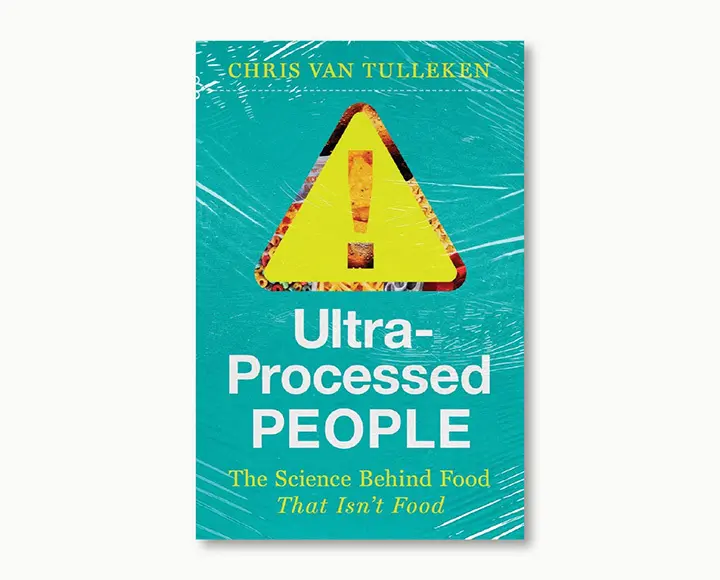
In his landmark book, Chris van Tulleken explores how these products are not just "food" but "industrially produced edible substances." An easy ultra processed people book summary for beginners is to look for ingredients that you wouldn't find in a standard home kitchen. This is the hallmark of the NOVA classification system’s fourth category.
To understand how to identify ultra processed foods, we have to look past the front-of-package marketing and study the ingredient label. If the list contains items like soy protein isolate, maltodextrin, high-fructose corn syrup, or various emulsifiers, you are likely holding a product of industrial engineering. These cosmetic ingredients are used to give "fake" food the texture, smell, and shelf-life of "real" food.
| Additive Category | Common Examples | Purpose in Engineering |
|---|---|---|
| Emulsifiers | Lecithin, Mono- and diglycerides, Polysorbates | Prevents oil separation; creates a "creamy" mouthfeel. |
| Thickeners/Bulking Agents | Modified starch, Xanthan gum, Guar gum | Adds weight and texture to low-cost ingredients. |
| Flavor Enhancers | MSG, Yeast extract, Hydrolyzed protein | Intensifies the savory "umami" profile to drive overconsumption. |
| Colors/Stabilizers | Artificial dyes, Potassium sorbate | Ensures the product looks the same for months on a shelf. |
Many of these industrial additives, particularly emulsifiers, are currently being studied for their role in thinning the gut’s mucus lining. This can allow bacteria to come into closer contact with the intestinal wall, potentially triggering the inflammatory responses linked to cardiometabolic health issues.
Truth 5: The Wellness Marketing Paradox
Modern food engineering has mastered the art of the health halo. This occurs when a product uses labels like "plant-based," "high protein," or "keto-friendly" to mask its ultra processed nature. A vegan "meat" patty or a "low-sugar" protein bar often belongs on the list of ultra processed foods to avoid because, despite the health claims, they are still industrial formulations.
These products are often stripped of their original nutrient density and then "fortified" with synthetic vitamins to make them appear healthy on a nutrition facts panel. However, research suggests that the body does not always process fortified synthetic nutrients in the same way it processes nutrients within a whole food matrix.
When navigating the grocery store, be wary of breakfast cereals or yogurts marketed for children. Many "healthy" cereals are actually nearly 40% sugar and are extruded through high-pressure machinery that completely destroys any natural grain structure. By the time the product reaches the bowl, it is an engineered carbohydrate delivery system, regardless of the "whole grain" stamp on the box.
Practical Ways to Reduce Ultra Processed Food Intake
Moving away from an ultra processed diet doesn't mean you have to cook every meal from scratch for three hours. It’s about understanding the spectrum of processing and making better choices within your lifestyle constraints. Here are some practical ways to reduce ultra processed food intake without feeling overwhelmed:
- Follow the "Home Kitchen" Rule: When reading labels, ask yourself: "Do I have these ingredients in my pantry?" If the answer is no for more than two or three ingredients, it’s probably ultra processed.
- The Swap Strategy: Trade ultra processed foods for minimally processed alternatives. instead of flavored "fruit" yogurt with thickeners and dyes, buy plain yogurt and add frozen berries. Instead of packaged white bread with 30 ingredients, look for a sourdough or stone-ground bread with just flour, water, and salt.
- Embrace Convenience Whole Foods: Not all convenience is bad. Canned beans, frozen vegetables, and pre-washed spinach are processed (Category 2 or 3 in NOVA), but they are not ultra processed. They retain their food matrix and nutrient density.
- Control the Snacks: Snacks are where the hyperpalatable formula hits hardest. Keep whole foods like nuts, fruit, or hard-boiled eggs nearby. These require more chewing and will trigger your satiety response much more effectively than a bag of puffs.
The goal isn't necessarily 100% elimination—which is nearly impossible in our current food environment—but rather a significant shift in balance. By moving from a diet that is 60% ultra processed to one that is 20% ultra processed, you can dramatically improve your metabolic health and reclaim your body's natural hunger signals.
FAQ
What is the no. 1 unhealthiest food?
While it is difficult to pin nutrition down to a single "worst" item, many experts point to sugar-sweetened beverages as the most problematic. Sodas and energy drinks are the epitome of ultra processed foods because they provide massive amounts of liquid calories with zero fiber, protein, or micronutrients. They cause immediate blood sugar spikes, do not trigger any satiety response, and are a primary driver of metabolic dysfunction globally.
What are the top 10 ultra-processed foods?
Common examples found on an ultra processed foods list include carbonated soft drinks, sweet or savory packaged snacks (like chips and puffs), mass-produced packaged breads and buns, reconstituted meat products (like chicken nuggets and hot dogs), instant noodles and soups, frozen pizza and ready-to-eat meals, sweetened breakfast cereals, fruit-flavored yogurts, distilled alcoholic drinks with added sugars, and "health" bars or meal replacement shakes.
What are the 9 processed foods you should never buy?
While "never" is a strong word, nutritionists often suggest avoiding these high-engineer items: canned frosting (mostly sugar and trans fats), non-dairy coffee creamers (oil and corn syrup), highly sweetened children's cereals, "fruit" snacks with no actual fruit, processed deli meats with nitrates and fillers, shelf-stable snack cakes, instant flavored rice or pasta mixes, margarine with hydrogenated oils, and sugar-free candies containing gut-disrupting artificial sweeteners.
What are ultra-processed foods to avoid?
To protect your long-term health, prioritize avoiding foods that have been completely stripped of their food matrix. This includes products with long lists of industrial additives like emulsifiers, thickeners, and artificial flavors. Specifically, look to reduce intake of items where the first three ingredients are a form of refined sugar, flour, or processed oil. Concentrating on whole, single-ingredient foods as the foundation of your diet is the most effective way to naturally phase out these engineered products.