Quick Facts
- Safety Status: Commercial grocery store milk is safe to drink because standard processing eliminates the threat of infection.
- Detection: Approximately 20% of pasteurized retail milk samples nationwide tested positive for viral fragments, which are non-infectious remnants.
- Process: Traditional High-Temperature-Short-Time (HTST) pasteurization is proven to effectively inactivate the H5N1 virus.
- Risk Factor: Unpasteurized or raw milk remains high-risk as it lacks the thermal treatment needed to kill pathogens.
- Expert Verdict: Public health agencies confirm that the presence of genetic material does not equal a live, infectious virus.
Commercial grocery store milk remains safe to consume during bird flu outbreaks because the pasteurization process effectively inactivates the H5N1 virus. While PCR testing may detect viral fragments in the commercial supply, these are merely non-infectious remnants of the virus's genetic material. Public health agencies like the FDA confirm that these fragments pose no threat to human health as the virus is no longer live or capable of replication.
Fragments vs. Live Virus: Understanding PCR Results
When news broke that H5N1 in commercial milk supply was being detected across the United States, many consumers felt an immediate sense of alarm. However, to understand why your morning latte is still safe, we have to look at the technology used to find the virus. Most of these detections come from Polymerase Chain Reaction (PCR) testing.
PCR is incredibly sensitive; it is designed to find the genetic "fingerprints" of a pathogen. In the context of bird flu milk, a positive PCR test simply means the machine found nucleic acid remnants. It does not mean the virus is whole, active, or capable of making you sick.
To visualize this, think of a grocery store. If you find a broken, empty eggshell on the floor, you know an egg was once there. However, you cannot take that broken shell home and fry it for breakfast. In this analogy, the live H5N1 virus is the whole egg, and the viral fragments are the shattered shells. The pasteurization process breaks the "egg," leaving behind only the harmless pieces that the PCR test eventually picks up.
As part of ongoing public health surveillance, the government has been very transparent about how the FDA tests commercial milk for H5N1. In a recent study of 297 retail samples collected from various states, researchers looked specifically for viable viruses. The results were clear: while genetic fragments were present in some samples, not a single one contained a live, infectious virus. This distinction is the difference between a theoretical risk and a real-world health threat.
| Feature | Live H5N1 Virus | Viral Fragments |
|---|---|---|
| Structure | Intact with a lipid envelope | Broken pieces of genetic material |
| Infectivity | Can invade cells and replicate | Non-infectious and "dead" |
| Detection Method | Viral culture (growth in a lab) | PCR testing (genetic fingerprint) |
| Safety Risk | High (if found in food) | Negligible / None |

The Science of Thermal Inactivation: How Pasteurization Works
The primary reason we can confidently say bird flu milk in the grocery store is safe is due to the science of thermal inactivation. The H5N1 virus, classified as a Highly Pathogenic Avian Influenza, is an enveloped virus. This means it is surrounded by a layer of fat and protein that it needs to attach to host cells.
Heat is the natural enemy of this lipid envelope. When milk undergoes pasteurization, the heat essentially melts this protective layer, causing the virus to fall apart. The standard process used by the dairy industry is called High-Temperature-Short-Time (HTST) pasteurization.
Research by the USDA and FDA has confirmed that the safe temperature for pasteurizing milk to kill bird flu is 161 degrees Fahrenheit for 15 seconds. This specific combination of time and temperature provides a massive margin of safety. In scientific terms, this process achieves a 5-log reduction or greater in pathogen levels, meaning it kills 99.999% of any harmful microorganisms that might have been present in the raw product.
Safety Spotlight: Pasteurization Standards Most milk in the U.S. is treated at 161°F (71.7°C) for 15 seconds. Ultra-Pasteurized (UP) milk goes even further, reaching 280°F for two seconds. Both methods are more than sufficient to destroy the structural integrity of the H5N1 virus.
Because commercial dairy production involves pooling milk from many different farms, the viral load quantification in a large tank might be high before processing. However, the mechanical and thermal rigor of modern microbiological food safety protocols ensures that what reaches the consumer is nothing more than inert genetic code.
The Raw Milk Risk: Why Unpasteurized Dairy is Different
While the commercial supply is secure, the situation changes dramatically when we discuss raw milk. There is a significant difference between live H5N1 virus and viral fragments in milk when the milk has never been heated. If you are wondering is raw milk safe from bird flu, the answer from a science-based nutritional perspective is a firm "no."
On farms where dairy cattle have been infected with Highly Pathogenic Avian Influenza, the virus is found in extremely high concentrations in the milk itself. In these cases, the milk is the primary site of the virus. Without pasteurization, there is no "kill step" to neutralize the pathogen.
The health risks of consuming raw milk with H5N1 virus are not just theoretical. We have seen evidence of cross-species spillover on farms where barn cats consumed raw milk from infected cows and subsequently died from severe neurological complications. While humans have a different biological makeup than cats, the presence of such a high viral load in an untreated food product creates a clear zoonotic transmission pathway.
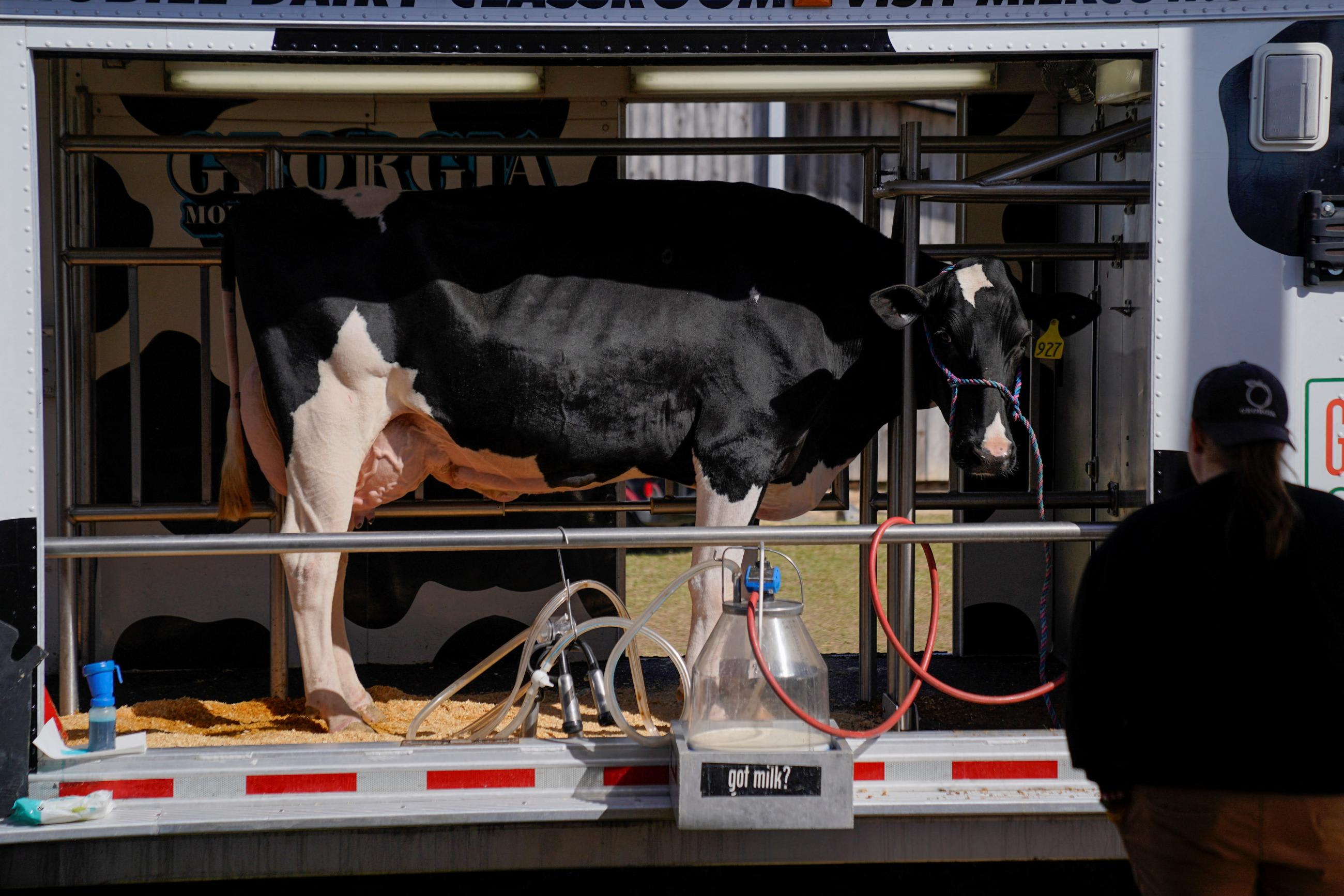
Dairy herd monitoring is currently underway to identify infected animals, but as a consumer, the most actionable step you can take is to avoid unpasteurized dairy. Choosing processed products ensures that the cycle of infection is broken before it reaches your kitchen table.
The Biological Gauntlet: Can Humans Be Infected by Ingestion?
A common question I receive as an editor is whether the human body could handle the virus even if a small amount of live H5N1 were ingested. While we generally think of the "flu" as a respiratory illness, the concern here is foodborne transmission.
Humans have several natural defenses that act as a biological gauntlet. Our stomach acid is highly effective at denaturing the proteins of many viruses. Furthermore, our digestive enzymes, like proteases, are designed to break down the very types of proteins that make up the H5N1 viral structure. This is one reason why the primary risk for H5N1 remains respiratory or through the eyes (mucous membranes), rather than through the digestive tract.
However, we cannot rely on stomach acid alone, especially when we have the technology to eliminate the virus before consumption. It is also important to note the symptoms of H5N1 infection from dairy exposure observed so far in farmworkers. In the few documented cases of human infection related to the 2024 outbreak, the symptoms were primarily conjunctivitis (pink eye) and mild respiratory issues, likely due to direct contact with milk splashes or aerosols during the milking process, rather than drinking pasteurized milk.
Epidemiological assessment continues to monitor for any changes in the virus that might make it more easily transmissible to humans, but current evidence suggests that the risk to the general public through the food supply remains very low, provided you stick to pasteurized products.
FAQ
Is it safe to drink milk during a bird flu outbreak?
Yes, it is safe to drink grocery store milk during bird flu outbreak because the milk sold in retail stores must be pasteurized. This heat treatment is specifically designed to kill harmful bacteria and viruses, including H5N1. Public health agencies like the FDA and USDA continue to monitor the supply to ensure safety.
Does pasteurization kill bird flu virus in milk?
Yes, pasteurization effectively inactivates the H5N1 virus. Research confirms that the standard High-Temperature-Short-Time (HTST) process, which heats milk to 161 degrees Fahrenheit for 15 seconds, destroys the virus's ability to infect cells, leaving only harmless viral fragments behind.
Can humans catch bird flu from drinking contaminated milk?
There is no evidence of humans catching bird flu from drinking pasteurized milk. The pasteurization process ensures that no live virus is present in the final product. While raw, unpasteurized milk could theoretically transmit the virus, the commercial supply is treated to prevent this risk.
Is raw milk safe to consume given the bird flu risk?
No, health officials strongly advise against consuming raw milk, especially during an H5N1 outbreak. Raw milk does not undergo the heat treatment required to kill the virus. In infected dairy cattle, the virus is found in high concentrations in the milk, making unpasteurized products a significant health risk.
What are the symptoms of bird flu in dairy cattle?
In dairy cattle, Highly Pathogenic Avian Influenza symptoms often include a sudden drop in milk production, a change in milk consistency (becoming thicker and yellowish), decreased appetite, and fever. Dairy herd monitoring is used to identify these cows and divert their milk away from the human food supply as an added precaution.