Current FDA Shortage Status Product: Semaglutide Injection (Ozempic/Wegovy) Status: Currently listed on the FDA Drug Shortage Database. Compounding Status: Legally permissible under Section 503A and 503B of the FD&C Act while the shortage persists. Resolution Window: Anticipated supply stabilization through late 2025 or early 2026.
Quick Facts
- Safety Status: Compounded semaglutide is NOT FDA-approved and does not undergo the same pre-market review for safety, efficacy, or quality as brand-name drugs.
- Chemical Risk: Many compounded versions use semaglutide sodium or semaglutide acetate, which are salt forms not clinically studied or approved for human use.
- Dosing Hazards: Patients using vials and syringes face a 10x higher risk of dosing errors compared to those using the calibrated Ozempic injector pen.
- Adverse Events: As of July 2025, over 600 adverse events have been reported specifically linked to compounded versions of these medications.
- Verification: Legitimate compounded drugs must come from pharmacies following USP 797 and USP 800 sterile compounding standards.
- Hospitalization Risk: Data indicates that compounded GLP-1 receptor agonists are associated with significantly higher odds of hospitalization compared to the original formulations.
Compounded semaglutide is not FDA-approved and may carry safety risks compared to brand-name medications like Ozempic. While pharmacies can legally compound drugs during shortages, some products may contain unstudied salt forms rather than the base active ingredient. To minimize risk, patients should use pharmacies accredited by the National Association of Boards of Pharmacy (NABP) that follow USP 797 and 800 sterile compounding standards to ensure compounded semaglutide safety is maintained.
In my years as a preventive healthcare editor, I have rarely seen a medication transform the lifestyle landscape as rapidly as GLP-1 receptor agonists. For many, these drugs are more than a weight-loss tool; they are a bridge to better metabolic health and reduced systemic inflammation. However, the surge in demand has outpaced supply, leading many of you to look toward compounding pharmacies as an alternative. While I understand the frustration of a disrupted routine, we must approach these alternatives with an evidence-based lens and a high degree of caution. Your long-term wellness should never be sacrificed for short-term convenience.
The Legal Landscape: FDA Warnings and Shortage Status
The world of pharmaceutical compounding exists to help patients with unique needs, such as those with allergies to specific dyes. However, the current drug shortage list has pushed compounding into the mainstream. Under the Federal Food, Drug, and Cosmetic Act, the FDA allows pharmacies to create copies of "essentially identical" drugs when a medication is in short supply. This is a temporary exception meant to ensure patient access, but it is not a loophole for unregulated production.
It is vital to distinguish between two types of facilities. Section 503A pharmacies are traditional state-licensed pharmacies that compound for specific patient prescriptions. Section 503B facilities are outsourcing facilities that manufacture larger batches and are subject to more stringent federal oversight. Despite these regulations, the FDA has issued several FDA warnings on compounded semaglutide because the agency does not verify the safety or effectiveness of these specific mixtures before they reach your door.
Recent data highlights the urgency of these warnings. As of July 31, 2025, the U.S. Food and Drug Administration had received 605 reports of adverse events specifically associated with the use of compounded semaglutide. This uptick suggests that as the shortage persists, the safety of compounded semaglutide during ozempic shortage remains a moving target for regulators and patients alike.
Chemical Integrity: Base Semaglutide vs. Salt Forms
When you receive a prescription for Ozempic or Wegovy, you are receiving the base form of the molecule. This is the only version that has undergone rigorous clinical trials to prove it works and won't cause unexpected harm. However, many compounding pharmacies have been caught using semaglutide sodium or semaglutide acetate. These are salt forms of the active pharmaceutical ingredients and are often used in laboratory research rather than human medicine.
The concern regarding compounded semaglutide salt forms vs base semaglutide safety is not just academic. Salt forms can change how the drug dissolves in your body, how quickly it enters your bloodstream, and how it interacts with your kidneys. The FDA has explicitly stated that it is unaware of any basis for compounding a drug using these salt forms that would meet federal safety requirements. When you are looking for a provider, you must confirm they are using the base semaglutide molecule, as using unauthorized salts can lead to unpredictable adverse drug reactions.
Dosing Risks: Why Manual Vials Are High-Hazard
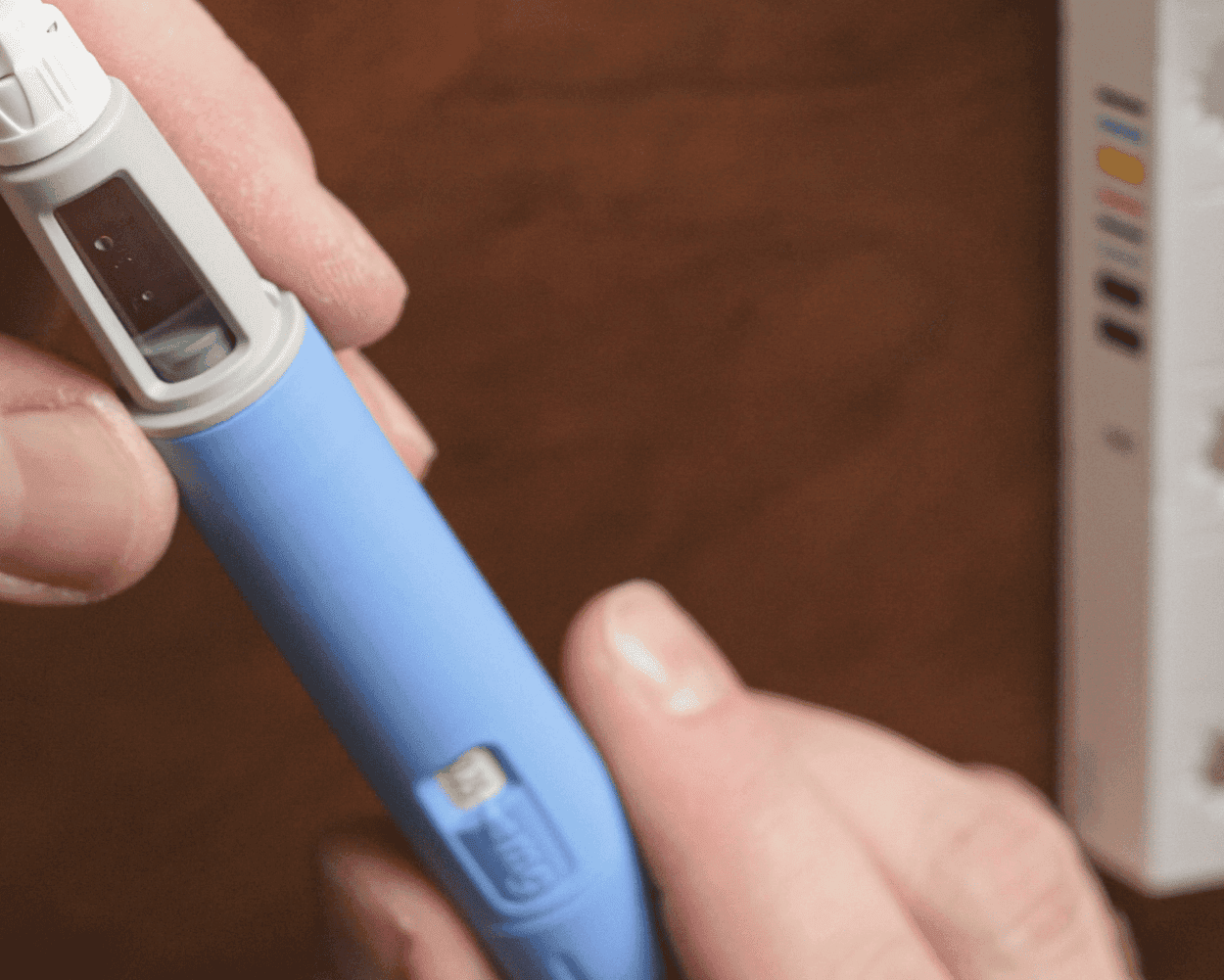
One of the most significant lifestyle shifts when moving from Ozempic to a compounded version is the administration method. Ozempic uses a pre-filled, "click" injector pen that is almost impossible to use incorrectly. Compounded versions, however, are typically distributed in glass vials. This requires you to manually draw the medication into insulin syringes.
This manual process is where many errors occur. The FDA reported that some patients mistakenly administered five to 20 times the intended dose of compounded semaglutide due to confusion between different units of measurement and unfamiliarity with manual syringe dosing. A mistake as simple as confusing "0.05 mL" with "0.5 mL" on a syringe can result in a massive overdose, leading to severe vomiting, dehydration, and acute pancreatitis.
| Feature | Ozempic / Wegovy Pen | Compounded Vial & Syringe |
|---|---|---|
| Dosing Mechanism | Pre-set internal dial (Click system) | Manual measurement with syringe |
| Error Potential | Very Low | High (Calculation errors) |
| Needle Type | Integrated / Simple attachment | Separate insulin syringes |
| FDA Review | Full pre-market approval | No pre-market safety review |
| Portability | High | Moderate (Requires vial/syringes) |
Preventing dosing errors with compounded semaglutide vials requires meticulous attention to detail. You must be trained on proper subcutaneous injection technique by a healthcare professional, not just a YouTube video. Always double-check your dose against the prescription label before the needle touches your skin.

The risks are not just theoretical. A retrospective analysis of the FDA Adverse Event Reporting System found that compounded GLP-1 receptor agonists were associated with 2.35 times higher odds of hospitalization compared to non-compounded formulations. This statistic underscores the difference in compounded semaglutide vs Ozempic safety and highlights why clinical oversight is non-negotiable.
How to Verify Your Pharmacy and Spot Counterfeits
In the digital age, it is easy for illegitimate online semaglutide suppliers to set up professional-looking websites. To protect your health, you must know how to verify compounding pharmacy credentials effectively. A legitimate pharmacy will always require a valid prescription from your doctor and will be transparent about its sourcing.
Red Flag Checklist for Online Suppliers:
- No prescription required: This is the biggest red flag and a sign of an illegal operation.
- Suspiciously low pricing: If the price is significantly lower than $200–$300 per month, the product may be counterfeit or diluted.
- No physical address: Legitimate pharmacies must be licensed by a State Board of Pharmacy.
- Lack of pharmacist access: You should always have the ability to speak with a pharmacist about your medication.
To ensure your safety, look for pharmacies that adhere to USP 797 and 800 standards for semaglutide compounding safety. These standards govern the sterile environment where the drugs are mixed, ensuring no bacteria or fungi contaminate the vial. You should also check for NABP accreditation. Using the NABP Safe Site Search tool is the most reliable way to identify pharmacies that have been vetted for safety and legitimacy.
Finally, be aware of specific counterfeit reports. The FDA has previously warned about specific lot numbers, such as PAR1229 and PAR0362, which were associated with counterfeit Ozempic. While compounding is different from counterfeiting, the lack of oversight in the "gray market" can lead to crossover. Always inspect your vial for cloudiness, particles, or unusual labeling before use.
The journey to metabolic health is a marathon, not a sprint. While the Ozempic shortage has created significant hurdles, the solution should not jeopardize your well-being. By staying informed on the legal landscape, insisting on the base chemical form, and verifying your pharmacy through the proper State Boards of Pharmacy, you can navigate this period safely. Always prioritize a consultation with your healthcare provider to discuss the risks and benefits before making any switch in your GLP-1 therapy.
FAQ
Is compounded semaglutide safe to use?
The safety of compounded semaglutide is not guaranteed by the FDA because it does not undergo the same rigorous testing as brand-name drugs. While it can be used safely if sourced from a reputable, accredited compounding pharmacy using pharmaceutical-grade base ingredients, the risk of contamination, incorrect dosing, and unstudied chemical forms is significantly higher than with FDA-approved products.
Is compounded semaglutide FDA approved?
No, compounded semaglutide is not FDA-approved. While the FDA allows the compounding of certain drugs during a shortage, the agency does not review these specific compounded formulations for safety, effectiveness, or quality before they are sold to patients. Only brand-name medications like Ozempic and Wegovy have received full FDA approval.
What are the risks of taking compounded semaglutide?
The primary risks include dosing errors due to manual measurement, the use of unapproved salt forms like semaglutide sodium, and potential contamination if the pharmacy does not follow sterile compounding standards. These factors can lead to increased adverse drug reactions, including severe gastrointestinal distress or even hospitalization.
How can I tell if a compounding pharmacy is legitimate?
You can verify a pharmacy by checking if it is licensed by its State Board of Pharmacy and has NABP accreditation. Legitimate pharmacies will always require a prescription, provide access to a pharmacist for consultation, and follow USP 797 and USP 800 standards for sterile compounding. Avoid any "pharmacy" that sells medication without a prescription or lacks a verifiable physical address.
Is compounded semaglutide as effective as the original drug?
There is no clinical data to prove that compounded semaglutide is as effective as the original drug. Because the manufacturing processes and ingredients can vary between pharmacies, the potency and absorption rates may differ from the brand-name version, potentially leading to less consistent results in blood sugar management or weight loss.