Quick Facts
- Prevention Power: Recent clinical breakthroughs from the ASCO Annual Meeting 2026 indicate that GLP-1 cancer prevention is a significant new frontier for patients managing metabolic health.
- Broad Spectrum Results: Clinical data shows that patients using GLP-1 receptor agonists have a significantly lower risk for 10 of 13 obesity-associated cancers compared to those using insulin.
- Metastasis Control: New research suggests these medications may reduce the likelihood of early-stage cancers (I, II, or III) progressing to stage IV by 38% to 50%.
- High-Impact Reductions: Evidence points to a 65% reduction in gallbladder cancer and a 59% reduction in pancreatic cancer risk for type 2 diabetes patients.
- Safety Advantage: Compared to traditional prevention strategies like long-term aspirin use, GLP-1 drugs offer a potentially safer profile regarding internal bleeding risks while managing cardiometabolic health.
- Mortality Benefits: Observational studies have linked these medications to an 8% lower risk of all-cause mortality in adults with both type 2 diabetes and obesity.
Recent clinical breakthroughs from the ASCO Annual Meeting 2026 have shifted the spotlight onto GLP-1 cancer prevention. Beyond their role in weight loss and blood sugar management, GLP-1 receptor agonists are showing a profound ability to reduce the risk of obesity-related malignancies. Real-world data indicates these medications offer a potentially safer alternative to aspirin for cancer risk management while simultaneously providing metabolic control for patients with type 2 diabetes.
The New Frontier in Oncology: GLP-1 Receptor Agonists and Cancer Risk Reduction
For years, we have viewed GLP-1 receptor agonists primarily through the lens of metabolic health. They were tools to stabilize blood glucose and shed excess weight. However, the latest research on GLP-1 and reduced cancer mortality rates suggests we are entering a new era of preventive medicine. The transition from diabetes management to cancer prevention is rooted in how these drugs interact with the body's inflammatory and insulin-signaling pathways.
During the recent ASCO Annual Meeting 2026, researchers presented data from the TriNetX database, involving a cohort of over 281,000 patients. The findings were striking. GLP-1 receptor agonists cancer risk reduction isn't just a side effect of weight loss; it appears to be a systemic benefit. One of the most compelling pieces of evidence involves tumor GLP-1R expression. In patients where these receptors are highly expressed within a tumor, there is an associated 33% lower risk of death, suggesting that GLP-1 signaling plays a direct role in survival analysis and disease outcome.
This is a massive shift for long-term cancer prevention benefits of GLP-1 for diabetic patients. We are no longer just talking about managing a chronic condition; we are talking about actively lowering the threat of some of the most aggressive malignancies known to medicine.
Study Snapshot: Risk Reduction by Cancer Type
| Cancer Type | Risk Reduction Percentage | Evidence Source |
|---|---|---|
| Gallbladder Cancer | 65% Reduction | pmlive.com |
| Pancreatic Cancer | 59% Reduction | pmlive.com |
| Colorectal Cancer | Significant preventive benefit | ASCO GI 2026 |
| Endometrial Cancer | Significant decrease | JAMA Oncology |
| Overall Obesity-Related | 7% to 17% Reduction | ASCO/JAMA |
Targeted Protection: Colorectal, Breast, and Lung Cancer
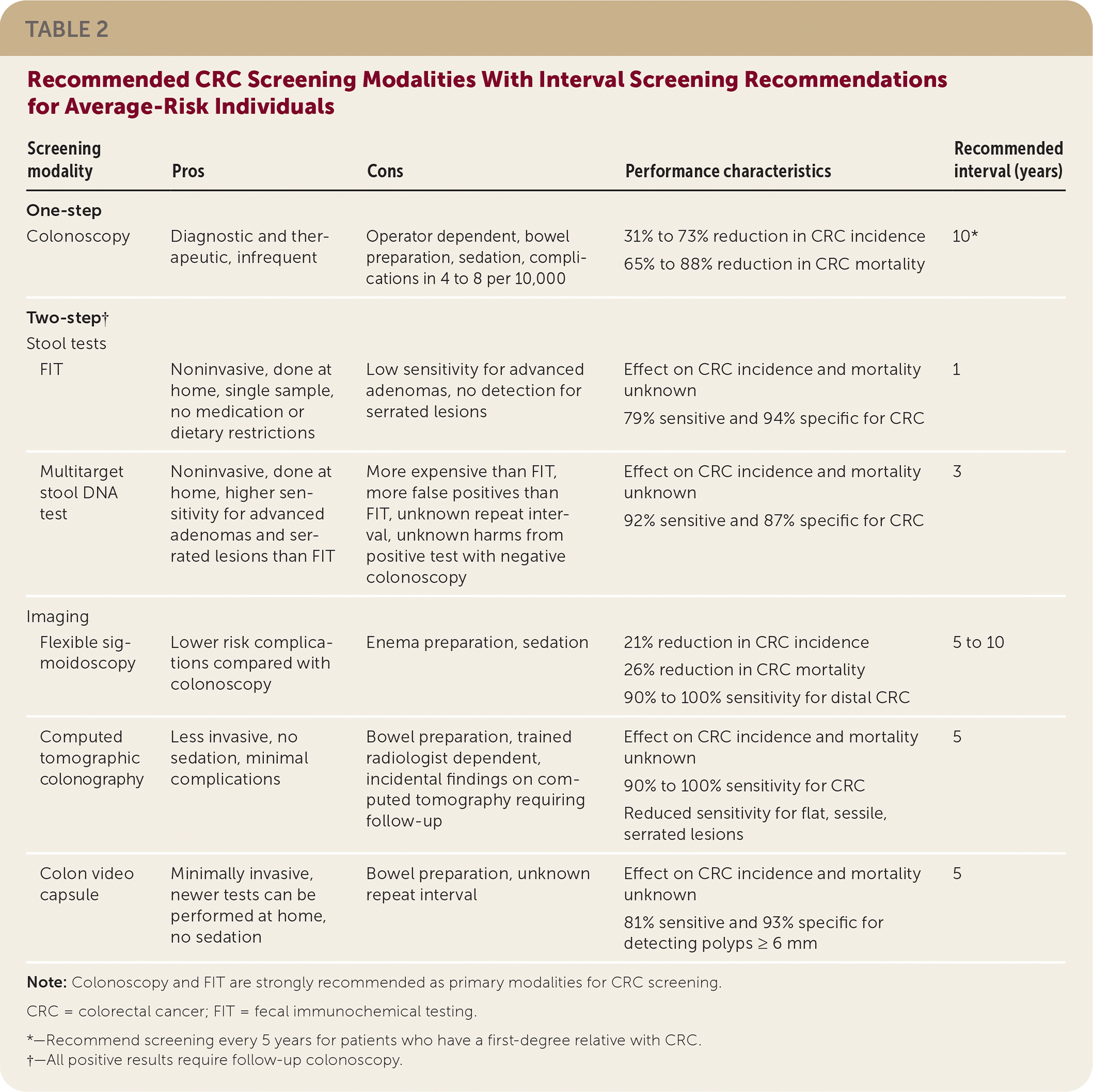
The protective reach of GLP-1 medications extends across various organ systems. For many men and women, the fear of colorectal cancer is a constant as they age. Recent evidence has positioned GLP-1 receptor agonists for colorectal cancer prevention as a viable medical strategy. By improving metabolic health and reducing systemic inflammation, these drugs create an environment that is less hospitable to tumor growth.
In a large-scale study of 1.6 million patients with type 2 diabetes, those treated with these agonists showed a 65% reduction in gallbladder cancer and a 59% reduction in pancreatic cancer risk compared to those on insulin. This data underscores the importance of type 2 diabetes medications and cancer prevention as a unified goal.
Furthermore, the impact of GLP-1 receptor agonists on breast cancer survival and progression has become a focal point of gastrointestinal oncology and general oncology alike. For patients already diagnosed with stage I, II, or III cancers, GLP-1 medications for preventing obesity-related cancer progression are showing the ability to inhibit metastasis. By influencing GLP-1 signaling, these drugs may help prevent early-stage malignancies from advancing to the much more dangerous stage IV. This metastasis inhibition is a critical component of precision medicine, allowing doctors to tailor treatments that protect the patient on multiple fronts.
Research published in JAMA Oncology involving over 86,000 individuals found that use of these drugs was linked to a 17% overall reduction in cancer risk among people with overweight or obesity. This is not just a minor statistical bump; it is a significant shift in the landscape of preventive care.
Comparative Insights: GLP-1 vs. Aspirin and DPP-4 Inhibitors
When we look at preventive strategies, we often compare new therapies against the established "gold standard." For years, low-dose aspirin was the primary recommendation for colorectal prevention. However, aspirin carries the inherent risk of internal bleeding, particularly in older populations. Comparative studies presented at ASCO GI 2026 suggest that when comparing GLP-1 drugs and aspirin for cancer risk reduction, the GLP-1 agonists provide a similar preventive benefit with a much more favorable safety profile.
Unlike aspirin, which primarily focuses on blood-thinning and mild anti-inflammatory effects, GLP-1 therapies provide a dual advantage by managing both cardiometabolic health and long-term cancer risk. This makes them a more comprehensive tool for longevity.
We also see a clear distinction when comparing GLP-1 agonists to other diabetes medications, such as DPP-4 inhibitors (gliptins). An observational study of more than 170,000 adults found that GLP-1 receptor agonists were associated with a 7% lower risk of developing obesity-related cancers and an 8% lower risk of all-cause mortality compared to those taking DPP-4 inhibitors. This suggests that the specific mechanism of GLP-1 receptor activation offers unique immunomodulation and anti-inflammatory effects that other glucose-lowering drugs simply do not possess.
Safety and Precision Medicine: What Patients Need to Know
While the potential for GLP-1 cancer prevention is high, it is not a "one size fits all" solution. As an editor focused on longevity, I must emphasize that these are powerful pharmacological tools that require professional oversight. Precision medicine dictates that we look at the individual's genetic and medical history before starting any long-term regimen.
There are specific contraindications that every patient must be aware of. For instance, individuals with a personal or family history of Medullary Thyroid Carcinoma (MTC) or Multiple Endocrine Neoplasia syndrome type 2 (MEN 2) should generally avoid these medications. Pharmacovigilance remains a priority in the medical community to monitor the safety of GLP-1 receptor agonists for long-term cancer risk management.

When discussing GLP-1 cancer protection with a healthcare provider, it is important to view it as part of a broader comorbidity management strategy. These drugs are most effective when paired with a lifestyle that prioritizes nutrition, movement, and sleep. They are an enhancer of health, not a replacement for the fundamentals of vitality.
FAQ
Do GLP-1 medications help prevent cancer?
Yes, recent clinical evidence suggests that GLP-1 receptor agonists can significantly reduce the risk of several obesity-related cancers. Studies indicate that they work by improving metabolic health, reducing inflammation, and potentially interfering with the pathways that allow tumors to grow and spread.
Which types of cancer could GLP-1 drugs potentially prevent?
Research has shown reduced risks for 10 out of 13 obesity-associated cancers. This includes significant risk reductions in gallbladder, pancreatic, colorectal, endometrial, ovarian, and liver cancers. They have also shown promise in slowing the progression of lung and breast cancers.
Is there a link between GLP-1 agonists and lower colorectal cancer risk?
Yes, there is a strong link. Comparative studies have shown that GLP-1 receptor agonists offer a preventive benefit for colorectal cancer that is similar to aspirin but with a lower risk of side effects like internal bleeding. They are increasingly viewed as a key tool for gastrointestinal oncology prevention.
Can GLP-1 medications reduce the risk of obesity-related cancers?
Absolutely. Large-scale observational studies have found that users of GLP-1 medications have a 7% to 17% lower overall risk of developing cancers specifically linked to obesity. This is thought to be due to both the weight loss achieved and the direct anti-inflammatory effects of the drugs.
Does GLP-1 therapy lower the risk of breast cancer in women?
Clinical data suggests that GLP-1 receptor agonists can help prevent the progression of breast cancer from early stages to metastatic stage IV. Furthermore, high expression of GLP-1 receptors in some breast tumors is associated with improved overall survival rates, making these drugs a point of interest for long-term breast cancer management.